
.webp)
.webp)
.webp)
Valley of Flowers Trek
Valley of Flowers Trek
Uttarakhand

Location
Uttarakhand

Duration
6 days

Max Altitude
14100 ft

Trekking
37 km

Grade
Easy to Moderate
Get in Touch with Our Trek Expert
Monday–Saturday: 10 AM to 06 PM (GMT +5:30)
Location
Uttarakhand
Duration
6 days
Max Altitude
14100 ft
Trekking km
37 km
Grade
Easy to Moderate
Get in Touch with Our Trek Expert
Monday–Saturday: 10 AM to 06 PM (GMT +5:30)
Overview
Special Offer
Why is Valley of Flowers a Must- Do Trek?
- As the name suggests, the highlight of the trek is a stunning valley adorned with vibrant flowers that stretch endlessly across the landscape.
- The trek is renowned for its blooming alpine flora, with over 500 species of rare and colorful flowers, including the iconic Brahma Kamal and Himalayan Blue Poppy.
- One of the key highlights of the journey is a visit to Hemkund Sahib, one of the highest Gurudwaras in the world. It is not only a sacred site but also a stunningly scenic location.
- The Valley of Flowers is recognized as a UNESCO World Heritage Site, celebrated for its exceptional natural beauty and surreal environment.
- On the way, you pass through beautiful Himalayan villages like Pulna and Ghangaria. Ghangaria serves as the base for both the Valley of Flowers and Hemkund Sahib treks.
- The trail has mesmerizing views of cascading waterfalls, clear streams, lush green meadows, and vibrant mountain scenery. The rich colors of the valley, diverse wildlife, and majestic landscapes provide endless opportunities for photography.
- You’ll witness a dreamlike landscape, standing amidst a natural floral carpet with misty peaks rising all around.
- The valley is accessible only for a short window each year, making it a rare and memorable experience, truly a once-a-year opportunity.
A Floral Beauty
The trek in Uttarakhand, is a national park and a UNESCO world heritage site, making it not only a loved trek in India but also worldwide. It is a renowned trekking destination because of its rare and exotic species of flora. The valley is way more beautiful than you can imagine, every trekker who has been here has been left mesmerized by the beauty of it. The majestic mountains in the background adds more beauty to it. Spreading over an area of 87 sq kilometers in the Chamoli district, the valley is a living paradise in the Nanda Devi Biosphere Reserve. This part of the Himalayas bursts into life every monsoon, letting you experience a vibrant display of flora and fauna that is both rare and unique.
The trek to Valley of Flowers begins from Pulna, and takes you through raw Himalayan beauty to two iconic locations, the valley of Flowers National Park and Hemkund Sahib. The trek follows on a clearly defined stone-paved path until the final stretch to the Gurudwara, while the trails towards Valley of flowers are uneven and rough. The Valley of Flowers trek is accessible to a wide range of trekkers, including children and seniors, due to its relatively short distance and moderate altitude. It’s a great way to introduce families to the wonders of trekking in the Himalayas. Throughout the path you can enjoy the beautiful sight, you would get a beautiful view of mountains like Hathi Parvat, Nilgiri and Gauri Parvat.
What Makes the Valley of Flowers special?
If you’ve ever seen pictures of the Valley of Flowers, you’d surely want to be there. But beyond its scenic beauty, there’s so much more that makes it special, and here’s everything you need to know.
- A Wide Range of Exotic Flowers and Animals: Through the trek, you will get to see an abundance of biodiversity including many rare and endangered plant species like the Brahmakalal, Blue Poppy and Cobra Lily. The valley remains beautiful and vibrant with blooming native flowers like White Leaf Hog foot, Himalayan Rose, Meadow Geranium, Dog Flower and Hook Stick Seed, etc. Apart from beautiful flowers the valley is also home to various wildlife species like Asiatic Black Bear, Musk deer, Brown Bear, Red Fox, Blue Sheep and many more. Additionally, you would also spot various birds like Himalayan Monal (the state bird of Uttarakhand), Great Barbet, Himalayan woodpecker, Himalayan griffon and many more.
Click here to explore the diverse species found in the Valley of Flowers. - Hemkund Sahib- One of the world’s highest Gurudwara: Hemkund Sahib is another highlight of this trek. It is a beautiful pilgrimage site and a place of worship dedicated to Guru Gobind Singh, the tenth Sikh Guru. The Gurudwara is located at a picturesque location, amid the towering mountains and a serene glacial lake beside it adds more to its beauty. During the winters the Gurudwara remains covered in snow and the lake is frozen. Being a place of worship it draws many pilgrims throughout the year. The pleasing natural setting and spiritual aura of the place adds serenity to your trip and will surely make you feel relieved. It is definitely a must visit destination close to the valley of flowers.
- UNESCO World Heritage site: The valley of flowers was designated as a UNESCO World Heritage Site in 2002 because of its outstanding universal value as a natural site. The unique landscapes here will prove to you why it is counted as one of the most beautiful destinations. You would see a blend of colours around, that you would have hardly ever imagined about. The beautifully blooming flowers and even the fallen ones, create a contrasting sight that will surely leave you mesmerized.
- A Living Canvas: The Valley of flowers trek will leave you stunned with its beautiful landscapes, strolling here feels like actually walking inside a painting. You will be surrounded by towering peaks, flowing waterfalls, and lush greenery. The region is an actual paradise for photographers with its vibrant flowers and dramatic landscapes, it offers endless opportunities for photography. The colorful blossoms end after a long stretch around a glacier. The landscape here changes and you would get a closer view of the mountain peaks like Nilgiri Parvat, Rataban and many more. Every frame here is a masterpiece that reveals the beautiful side.
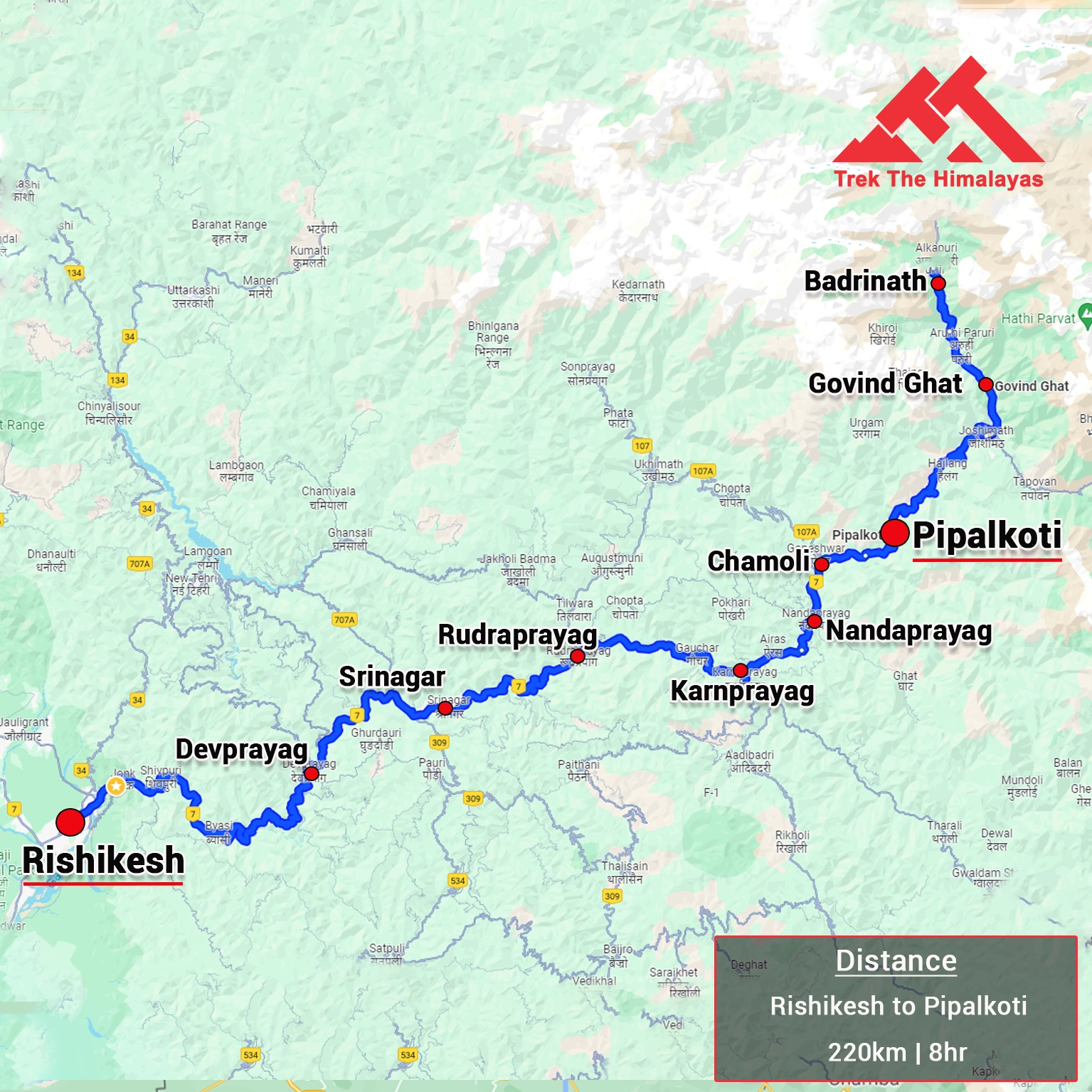
Rishikesh to Pipalkoti
- Altitude: 1,340 m/ 4,400 ft.
- Drive Distance: 200 km.
- Driving Time: 9-10 hrs.
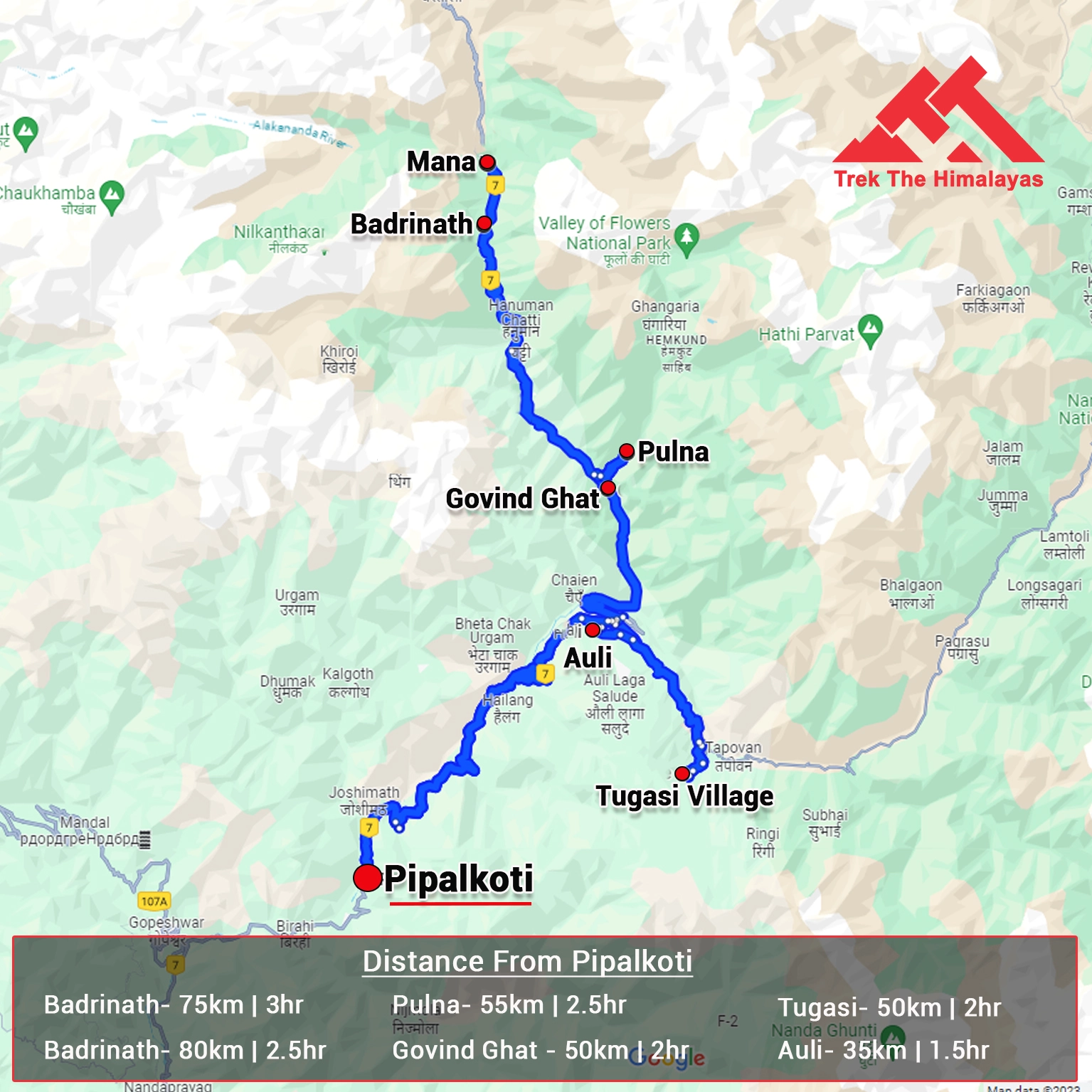
Drive From Pipalkoti To Govindghat - Pulna and Trek to Ghangaria
- Altitude
Pulna: 2100 m/ 6900 ft.
Ghangharia: 3,000 m/ 9,800 ft. - Drive Distance (Pipalkoti to Govindghat): 52 Km | 2 hours.
- Then Dirve Govindghat to Pulna in Local Union Transport 4km in 15min.
- Trek Distance (Pulna to Ghangharia): 9 km | 4 hours.
Ghangaria to Valley of Flower and back to Ghangaria
- Altitude: 3,500 m/ 11,500 ft.
- Trek Distance- 4 km, each way | 7hrs.
Prominent flowers: Blue Poppy, Snake Foil, White Leaf Hog Foot, Himalayan Rose, Meadow Geranium, Dog Flower, Hooked Stick Seed, and River Anemone.
Ghangaria to Hemkund Sahib and back to Ghangaria
- Altitude: 4,300 m/ 14,100 ft.
- Trek Distance: 6 km, each way | 8-9 hours.
Ghangaria to Govindghat and Drive to Pipalkoti (Badrinath optional)
- Trek Distance (Ghangharia- Pulna): 9 km | 4-5 hrs.
- Drive Distance (Pulna- Govind Ghat): 4km | 15min.
- Drive Distance( Govind Ghat- Badrinath): 25km | 1 hr.
- Drive Distance (Badrinath-Pipalkoti): 75km | 3-4 hrs.
Note:
- GovindGhat to Badrinath is a landslide-prone area in monsoon time so if our leaders find that your safety is at risk due to weather conditions/ landslide or road blockage then we shall skip Badrinath altogether and drive to Pipalkoti directly.
Pipalkoti to Rishikesh
- Drive Distance: 200km | 9-10km.
Note:
- Keep a buffer day in your travel plan.
- If buffer day is not used in the travel then it can be used to Explore Rishikesh.
- Read the article Things to do in Rishikesh.
- Distance, Altitude, and Trekking hours are approximate and rounded off.
- Keep the original and copy of ID proof handy.
- Come one day early if planning to come by p...
- Pulse rate at rest must be in between (60 to 100 beats per minute).
- Blood Pressure Reading must be in between (DIASTOLIC 75 – 85, SYSTOLIC 100 - 130 mm Hg).
- Respiratory rate at rest must be in between (12 to 20 breaths per minute).
- Should not have Liver and kidney issues.
- Should not have Diabetes Mellitus, Bronchial Asthma, Heart problems, Hypertension, etc.
- No pacemaker implant.
- People with Sinus issues, Epilepsy please contact to trek coordinator before booking the trek.
- If your BMI is not normal, Please contact our Trek coordinator before Trek booking.
Medical & Disclaimer Form (Mandatory Documents) Click here to download Medical & Disclaimer Form
How to reach — Maps
Pick-Up Information
- It is essential for everyone to arrive at Rishikesh (06:00 am)
- Pick-up Location: Back Stayz, Laxman Jhula, Near SBI Bank, Tapovan, Rishikesh
- Once you have reached Rishikesh, TTH will manage the rest of your travel arrangements, if you have opted for TTH's pick-up service, you can select this option during the booking process by adding it as an add-on.
Options to Reach Rishikesh
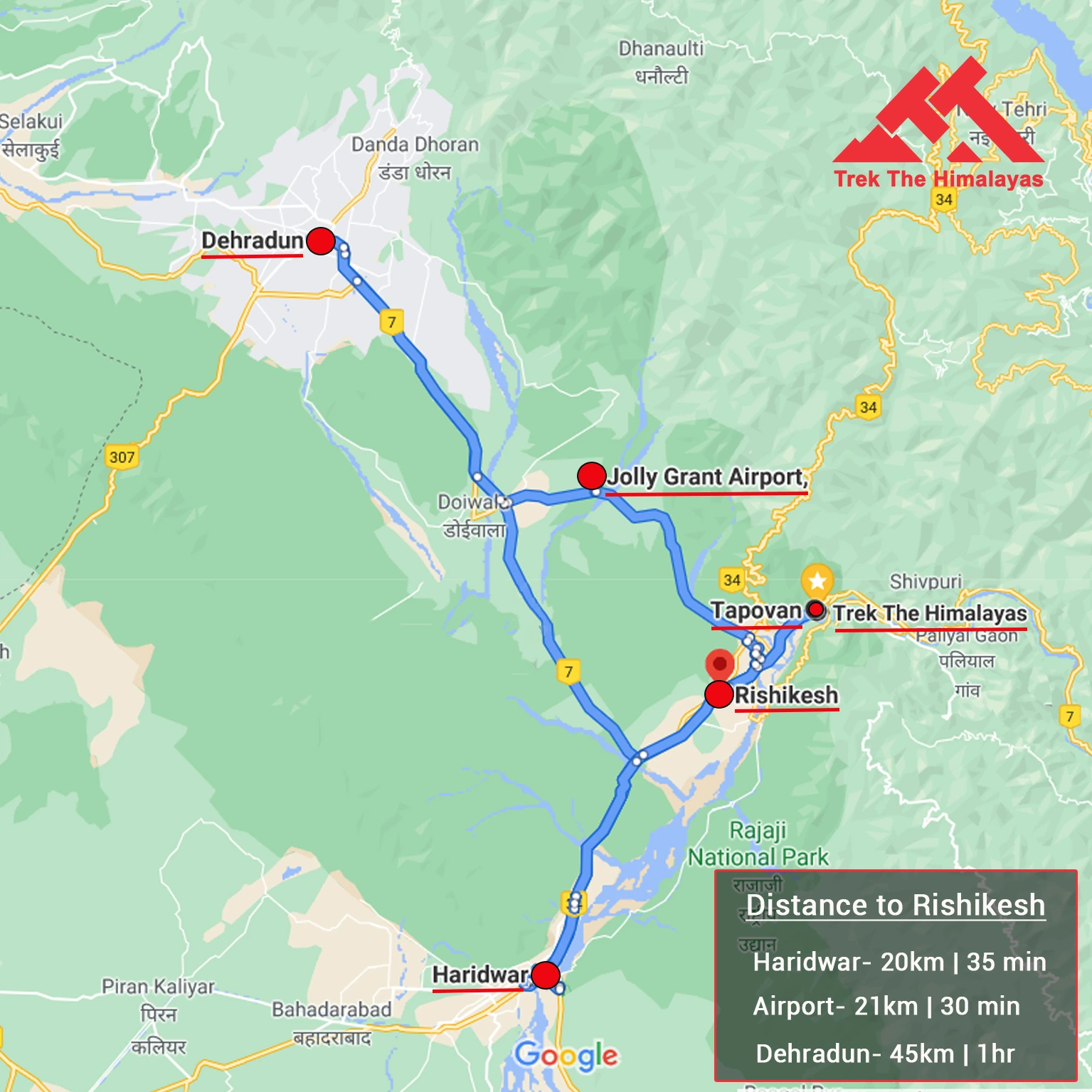
First, you can arrive at Delhi, Dehradun airport or Chandigarh. The journey from these locations to Rishikesh is explained below.
1. Take overnight train/bus to Rishikesh.
2. Take overnight train/bus to Haridwar and drive to Rishikesh (25km | 35 min drive with normal traffic).
3. Take overnight train/bus to Dehradun and drive to Rishikesh (50km | 1hr 20min drive with normal traffic).
( We always recommend going for the govt. Buses over the private ones outside the bus station as based on the experience we have found that there are very high chances of delay involved with private buses. Also, govt. Buses are always more reliable. Whichever bus you choose, just make sure to reach Rishikesh at least by 05:30 am. )
4. Board a flight to Dehradun airport (Jolly Grant Airport) (21 km, 30 min). If you're arriving by air, then come one day in advance.
Drop-Off Information
- The designated drop-off point is Tapovan, Rishikesh.
- Reach in Rishikesh by 6:30 to 7:30 pm.
- Please consider planning your subsequent travel arrangements after 10:00 pm.
Note - In July and August month always have a buffer day in your Itinerary due to the Monsoon.
- It's highly advisable to keep a buffer day in your travel plan. If the buffer day is not used, it can be used to explore Rishikesh.
( If you prefer to travel independently to Base camp and don't want to take TTH's pick-up service, you can either take a government bus or book a private cab from Rishikesh. Your trek coordinator will provide guidance on how to arrange for the bus or cab booking. )
- TTH offers comfortable transportation through Tempo Traveler, Bolero, or equivalent vehicles. If you wish to upgrade your mode of transportation, please contact your trek coordinator for further assistance.
1. Accommodation (as per the itinerary):
- Guest house in Pipalkoti(Day 1 and Day 5 as per the itinerary).
- Ghangharia on Day 2, Day 3, and Day 4.
- Triple/quad sharing (separate for males and females throughout the trek)
2. Meals (Veg + Egg):
- All meals (including tea, soup, snacks, etc.) from Day 1 Dinner to Day 5 Dinner. Morning and evening tea, accompanied by light snacks, are included in the Valley of Flowers trekking package.
3. Support:
- 1 Versatile base camp manager handles communication and deploys extra manpower in emergencies.
- 1 Mountaineering & First aid qualified professional trek Leader.
- 1 Experienced high-altitude chef.
- Local experienced guides (Number of guides depending on the group size).
- Enough support staff.
4. Trek equipment:
- Sleeping bag, Sleeping liners (if required), mattresses, and Utensils.
- 3 men all season trekker tent (twin sharing), Kitchen & Dining tent, Toilet tent.
- Camping stool, Walkie talkie.
- Ropes, Helmet, Ice axe, Harness, Gaiters & crampons (if required).
5. First aid:
- Medical kit,Stretcher,Oxygen cylinder,Blood pressure monitor,Oximeter,Stethoscope.
6. Transportation (as per the itinerary):
- Transport from Rishikesh to Pipalkoti and return ( If opted from TTH).
- Transport Pipalkoti to Govindghat, Pulna & Badrinath and return as per the itinerary ( If opted from TTH).
7. Mules/porters to carry the central luggage.
8. Cloakroom facility available at the base camp for additional luggage
9. All necessary permits and entry fees, Upto the amount charged for Indian
10. Trek Completion Certificate.
Valley of Flowers Trek Packa
Trek Essentials
Cancellation Terms
To request a cancellation, please email us at info@trekthehimalayas.com using your registered email ID.
Cancellations prior to 25 days from the start of the Trip
Refund Options
- 5% deduction of trek fee
- 100% trek fee cash voucher for any trip till one year
- Transfer your trek (any trek, any date) to your friend
Cancellation between 24 days and 15 days to the start of the Trip
Refund Options
- 30% deduction of trek fee
- 100% trek fee cash voucher for same trip till one year
- 85% trek fee cash voucher for any trip till one year
- Transfer your trek (same trek, any date) to your friend
Cancellation between 14 days and 10 days to the start of the Trip
Refund Options
- 50% deduction of trek fee
- 80% trek fee cash voucher for same trip till one year
- 70% trek fee cash voucher for any trip till one year
- Book the same trek, in the same season, with any other batch
- Transfer your trek (same trek, any date) to your friend
Cancellation less than 9 days to the start of the trek.
Refund Options
- No cash refund
- 20% trek fee cash voucher for the same trip till one year
- 10% trek fee cash voucher for any trip till one year
- Transfer your trek (same trek, same date) to your friend
- To reschedule a trek (same trek only), a 30 % rescheduling fee of the trek cost will apply.
Cancellation Policy (Emergency Cases):
In case of a death in the immediate family (parents, siblings, spouse, children) or if the trekker is hospitalized (min. 48 hours) or suffers a fracture (leg/arm) within a week before the trek, even if canceled a day before:
90% trek fee refund in cash & 10% as a voucher (valid for 1 year, for any India trek).
Valid documents required. We’re here to support you during tough times.
Note:
- Change of trek batch is dependent on the availability of seats in the batch
- In case of transferring a trek to a friend, he/she should satisfy all the mandatory requirements put forward by TTH
- TTH holds the right to change/cancel the policies, without prior notice
Booking and Payments
- The Participant is responsible for verifying the accuracy of all details, including Trip dates and personal documentation, at the time of booking.
- Payments must be made in accordance with the timelines and instructions provided by TTH. Late payments may result in cancellation of booking without refund.
- In the event of a cash refund, only the portion of the payment made in cash shall be eligible for refund in cash. Any booking made using voucher, discounts, promotional codes, or through any non-cash mode of payment shall not be eligible for a cash refund under any circumstances.
- Refunds, if applicable, shall be processed within 15–30 working days of confirmation.
- All add-on bookings are subject to the respective add-on cancellation policy, and refunds will be processed accordingly.
- Voucher Terms
- This is a non-transferable voucher
- The voucher cannot be merged with any other offer of Trek The Himalayas
- The voucher is valid for Trek booked directly with Trek The Himalayas in India
- To avail the voucher please use your register phone number or e-mail id
- All the other Terms of booking a trek with Trek The Himalayas are applicable to the voucher
Itinerary and Modifications
- TTH reserves the right to modify, shorten, or cancel any part of the Trip due to transportation delays, weather, health emergencies, or other unforeseen circumstances including Force Majeure.
Cancellations and Refunds
- No refunds or vouchers, partial or otherwise, shall be provided for voluntary withdrawal, non-utilisation of services, or removal from the Trip.
- If TTH cancels the Trip before arrival at the designated pick-up point due to unforeseen circumstances or Force Majeure, the Participant may choose from:
- An alternate Trip/date.
- A credit voucher valid for one (1) year.
- Transfer to another Trip, with cost differences payable by the Participant.
- If the Trip is abandoned post-arrival at the designated pick-up point, no cash refund or voucher shall be issued. The Trek Again Policy may apply at TTH’s discretion.
- TTH shall not be liable for any associated travel costs such as flights, accommodation, or visa fees.
Force Majeure
- Events beyond its control including but not limited to earthquakes, landslides, strikes, curfews, war, pandemic, government restrictions, heavy rainfall or snowfall, windstorms, road blockages, trail disruption, or withdrawal of permits, TTH shall not be held liable for any cancellation, delay, or service modification caused by Force Majeure.
Government employees can avail the benefit of Special Casual Leave (SCL) when they join us for a trekking expedition. As per Pay Commission guidelines, up to 30 days of Special Casual Leave can be availed in a calendar year for trekking or mountaineering expeditions conducted through a registered organisation.
Trek The Himalayas is a registered adventure tour operator with the Indian Mountaineering Foundation (IMF) and the Ministry of Tourism (MoT), making your trek eligible for SCL benefits.
To apply, email us at info@trekthehimalayas at least 20 days before the trek departure date, with the following details:
- Trek name and trek date
- Booking details
- Full name
- Designation
- Department and department address
This benefit is exclusive to Indian Government employees and is applicable only for treks within India.
Frequently Asked Questions (FAQ)

The best time to visit the Valley of Flowers is between June and September, right after the snow has melted and the valley comes alive. July and August are peak bloom months when thousands of flowers are in full color. The monsoon rains bring the valley to life, and makes it the most colourful and vibrant during this time.
The total trekking distance of the valley of flowers is around 37 km, depending on the route and whether you also visit Hemkund Sahib. The trek from Pulna to Ghangaria (base camp) is about 9 km, and from Ghangaria to the Valley of Flowers is another 4 km one way. If you include the Hemkund Sahib trek, that’s an additional 6 km one way.
The Valley of Flowers trek itinerary follows a 6-day plan. The itinerary goes like this:
Day 1: Drive from Rishikesh to Pipalkoti
Day 2: Drive from Pipalkoti to Govindghat - Pulna and Trek to Ghangaria
Day 3: Trek from Ghangaria to Valley of Flowers and back to Ghangaria
Day 4: Trek from Ghangaria to Hemkund Sahib and return to Ghangaria
Day 5: Trek from Ghangaria to Govindghat and Drive to Pipalkoti.
Day 6: Drive from Pipalkoti back to Rishikesh
The Valley of Flowers height lies at an altitude of around 12,000 ft. The trek starts at Govindghat, which is at approximately 6,000 ft, and gradually ascends. Hemkund Sahib, if included, goes even higher, around 14,100 feet.
The trek starts from Pulna, located close to Govindghat in Uttarakhand. From Pulna, you begin the actual trekking route towards Ghangaria, the base for visiting both the Valley of Flowers and Hemkund Sahib.
The entire trek usually takes 6 days, including travel from Rishikesh/Haridwar. The actual trekking days are about 4, including the optional Hemkund Sahib visit. You need at least a week from Delhi, including travel time.
The Valley of Flowers is located in Chamoli district of Uttarakhand, in the western Himalayas. It lies within the Nanda Devi Biosphere Reserve and is a UNESCO World Heritage Site.
To reach the Valley of Flowers from Delhi, first travel to Rishikesh by train, bus, or car. From Rishikesh, take a road journey to Pipalkoti or Govindghat, which is the gateway to the trek. From there drive to Pulna, and then start the trek towards Ghangaria, the base village for visiting the Valley.
The Valley of Flowers Trek usually takes about 6 days to complete and covers a distance of approximately 37 kilometers. It includes beautiful trails, scenic landscapes, and a mix of easy and slightly steep sections.
Yes, forest permissions and entry permits are required. These permits help regulate footfall and ensure the conservation of the region’s biodiversity. However, you don’t have to worry about arranging them yourself. If you are trekking with an experienced organization like TTH (Trek The Himalayas), all necessary permits, forest permissions, and related fees are taken care of and included in your trek package. This allows you to enjoy the trek without the stress of handling logistics.
The Valley of Flowers trek is not very difficult, but it isn’t very easy either. It is generally graded as a moderate to difficult trek. The trail is well-defined and scenic, but it does include steep sections and long walking hours on some days, which can be tiring, especially for those who are not used to trekking in the mountains.
One of the challenges of this trek is the altitude. The highest point you reach is Hemkund Sahib, which is situated at around 14,100 feet (4,300 meters). At this height, the air becomes thinner, and some trekkers may feel the effects of altitude sickness. That’s why a good acclimatisation schedule and proper hydration are essential. The weather can also play a big role. Since the trek is open only during the monsoon months (July to September), you should be prepared for rain, wet trails, and slippery paths. Carrying rain gear and waterproof shoes becomes important. Temperatures can vary, pleasant during the day but cold in the early morning and evening, especially in places like Ghangaria or Hemkund Sahib. Despite these factors, with basic fitness, proper preparation, and a positive mindset, most people can complete the trek comfortably.
During the Valley of Flowers trek, you can expect to stay in simple lodges or guest houses along the way. These places offer basic but comfortable rooms with the necessary things like beds, blankets, and clean washrooms. Camping is not allowed inside the valley itself, so all stays are in nearby villages like Ghangaria. While the facilities are not very fancy, they are good enough to rest and relax after a long day of trekking.
Here are some of the essentials you should pack for the trek:
- Trekking shoes: A good pair of trekking shoes is essential for a comfortable trek. Make sure your shoes are well-fitted, sturdy and provide good grip on the trail.
- Warm Clothing: The weather can be unpredictable in the mountains, so it's important to carry warm clothing, including thermal innerwear, fleece jackets, down jackets, and waterproof jackets.
- Trekking pants: Carry comfortable and quick-drying trekking pants that are suitable for the weather conditions.
- Backpack: A good quality backpack with a capacity of 40-50 liters is ideal for carrying your essentials during the trek.
- Headlamp/Flashlight: Carry a good quality headlamp or flashlight with extra batteries for trekking during early morning or late evening hours.
- Water bottle: Carry a reusable water bottle and stay hydrated throughout the trek.
- Snacks: Carry energy bars, dry fruits, and snacks for instant energy during the trek.
- First aid kit: Carry a basic first aid kit, including band-aids, antiseptic cream, pain relief spray, and medicines for altitude sickness.
- Sun protection: Carry sunscreen lotion, sunglasses, and a hat to protect yourself from the harsh sun rays.
- Trekking poles: Trekking poles can help in maintaining balance and reduce the strain on your knees while trekking.
Yes, the Valley of Flowers is generally a safe place to visit. The local people are kind, helpful, and welcoming towards tourists. However, like any mountain journey, it's always a good idea to check the weather forecast and road conditions before you start your trip, especially during the rainy season. If you're trekking with us, your safety is our top priority. We follow strict safety measures throughout the trek and make sure our team is always prepared to handle any situation, so you can enjoy your journey with peace of mind.
The Valley of Flowers Trek Package includes all essential facilities to ensure a smooth and comfortable experience. A comfortable accommodation and all meals are provided, including tea, soup, and snacks. The package also includes a professional trek leader, experienced local guides, a skilled high-altitude chef, and sufficient support staff. High-quality trek equipment like tents, sleeping bags, and essential safety gear is provided.
Medical assistance is available with a first aid kit, oxygen cylinder, and other necessary equipment. Transportation for the entire trek route, including pick-up and drop-off, is included. Additionally, mules or porters carry central luggage, a cloakroom facility is available for extra baggage, and all necessary permits and entry fees are covered. A trek completion certificate is also provided.
No, camping is not allowed during the Valley of Flowers trek. The valley is part of a protected national park and is considered an ecologically sensitive area. To help preserve its natural beauty and delicate environment, no one is allowed to camp inside the valley at any time, including overnight. Trekkers usually stay in the small village of Ghangaria, which is the base for both the Valley of Flowers and Hemkund Sahib. There, you’ll find simple hotels and lodges to spend the night. These places are clean and offer basic facilities like beds, blankets, and warm food. Since the area is remote and high up in the mountains, don’t expect luxury stays but the peaceful surroundings and fresh mountain air make up for it!
Yes, mules are available to help carry luggage during the Valley of Flowers trek. They are commonly used on the route from Govindghat to Ghangaria and even towards Hemkund Sahib. If you don’t want to carry a heavy backpack or find it difficult to trek with all your belongings, you can easily hire a mule to make your journey more comfortable. This is especially helpful when walking uphill or over long distances. It’s a good option for those who want to enjoy the trek without getting too tired from carrying extra weight.
The Valley of Flowers trek is considered an easy to moderate level trek, so you don’t need to be an expert trekker, but having a decent level of physical fitness is important. The trail is mostly manageable, but there are some long walking hours, steep climbs, and downhill paths that can be tiring, especially at higher altitudes. Also, the weather in the mountains can change quickly, which adds to the challenge. To enjoy the trek without too much difficulty, it’s a good idea to start preparing in advance by doing regular walks, light jogging, or any form of cardio exercise. This will help build your stamina and make the trekking experience more enjoyable and comfortable.
During the Flower Valley trek, you’ll get to see over 500 different types of flowers blooming across the meadows. The valley turns into a colorful carpet of blossoms, especially during the monsoon season when most of the flowers are in full bloom. Many of these flowers are not just beautiful but also have medicinal properties. You’ll also come across some rare and endangered species that are hard to find elsewhere, like the Brahmakamal, Blue Poppy, and Cobra Lily. The entire valley is rich in biodiversity and is truly a paradise for nature lovers, photographers, and anyone who enjoys peaceful surroundings filled with natural beauty.
A few other best monsoon treks are :
- Hampta Pass Trek
- Kashmir Great Lakes (KGL)
- Markha Valley Trek
- Pin Bhaba Pass Trek
- Pin Parvati Pass Trek
- Yunam Peak Expedition
- Friendship Peak Expedition
These treks offer beautiful landscapes, lush green valleys, and snow-capped mountain views, making them perfect for monsoon adventures.
Valley of Flowers is famous for its wide variety of blooming alpine flora, with over 500 species of rare and colorful flowers, including the iconic Brahma Kamal, Cobra Lily, Himalayan Blue Poppy, and many more.
The Valley of Flowers Trekking package with TTH includes accommodations, meals and trekking equipment, First Aid, and support staff including local experienced guides, base camp manager and professional trek leaders.
The Valley of Flowers in Uttarakhand will open to the public on June 1, 2025, and is expected to close around October 31, 2025. The best time to visit the valley of flowers is typically between July and early September.
No, the Valley of Flowers trek cannot be completed in just one day. Reaching the valley itself requires a day-long hike from Ghangaria, which is only accessible after a prior day’s trek from Govindghat. Ideally, you should plan for at least 3 to 4 days to truly experience the beauty of the region without rushing, this allows you to explore the valley at ease and soak in its rich biodiversity.
Yes, beginners can definitely do the Valley of Flowers trek. With basic fitness and the right preparation, it’s a great choice for first-time trekkers. The well-laid path and support from guides make it beginner-friendly.
The Hemkund Sahib trek is about 15 kilometers if you start from Pulna, which is the base village. From Ghangaria, which is the last village before the climb, the distance to Hemkund Sahib is around 6 kilometers. It’s a steep but beautiful climb.
Yes, there is an entry fee to visit the Valley of Flowers National Park. But if you are trekking with Trek The Himalayas, you don’t have to worry, we take care of getting the entry permit for you.
When trekking to the Valley of Flowers, it’s important to wear clothes in layers. Carry warm, waterproof, and comfortable clothing. A windproof jacket, fleece, thermals, trekking pants, and good waterproof trekking shoes are a must. Don’t forget a raincoat and cap too!
Absolutely, the Valley of Flowers is more than worth the effort. It is a beautiful UNESCO World Heritage Site, which bursts into bloom during the monsoon months, transforming the landscape into a vibrant paradise filled with countless varieties of alpine flowers. The entire valley turns into a natural garden, painted in shades of pink, purple, yellow, and blue.
But it’s not just the flowers that make this trek special. Along the way, you’ll witness waterfalls, glacial streams, lush green meadows, and snow-covered peaks in the distance. The peaceful atmosphere and raw natural beauty make the journey deeply calming and refreshing. Even the trail leading to the valley, surrounded by forests and misty hills, feels like a scene from a fairytale.
Since the Valley of Flowers opens only for a few months each year, from June to early October, visiting it feels even more special. It’s a rare chance to see nature in one of its most beautiful forms. So yes, the Valley of Flowers is not just worth it, it’s a must-visit. The sights, the serenity, and the sense of wonder you’ll carry back make every step of the trek worthwhile.
No, staying overnight at Hemkund Sahib is not allowed. The place is located at a high altitude and weather conditions can turn extreme quickly, especially after sunset. Pilgrims and trekkers are allowed to visit during the day, but everyone must return to Ghangaria, the base village, by evening. The Gurudwara closes in the late afternoon, and it’s important to descend on time for your safety.
Yes, registration is mandatory to enter the Valley of Flowers National Park. The government maintains records of all visitors for safety and conservation reasons. If you are trekking with Trek The Himalayas, we will handle the registration and permits for you, so you don’t need to worry about the paperwork.
Mobile networks are very limited in the Valley of Flowers region. BSNL is the only provider that might have some connectivity in and around Ghangaria, but even that is quite weak and unreliable. Other networks like Jio, Airtel, or Vodafone usually stop working beyond Govindghat. Once you start the trek and enter the valley, you should be prepared for no mobile signal at all, and it's best to inform your family before the trek begins.
The Valley of Flowers trek is generally considered safe and beginner-friendly. The trail is well-built and commonly used by both trekkers and pilgrims. However, being well-prepared is important. Since the trek takes you to higher altitudes, proper acclimatisation, suitable clothing, and good physical fitness are necessary. Weather can be unpredictable, and rain is common during the season, so carrying waterproof gear and walking carefully on slippery paths is recommended. Trekking with a professional group adds an extra layer of safety and support throughout the journey.
At Trek The Himalayas, we offer more than just a trek, we let you experience a complete, safe, and memorable experience. When you choose us for the Valley of Flowers trek, you don’t have to worry about the small details. We take care of everything, from permits, stay, meals, to on-ground support, so you can fully focus on soaking in the beauty of the trail.
All our treks are led by certified and trained trek leaders who are experienced in high-altitude trekking and emergency response. They are well-equipped to guide you safely through the terrain and ensure that your health and comfort are always a priority. Along with the trek leader, we provide a dedicated support team, including local guides who know the region like the back of their hand, a base camp manager who handles logistics, and a kitchen staff that prepares nutritious meals throughout the trek.
What truly sets us apart is the positive and welcoming environment we create for our trekkers. Whether you join the trek with friends or come solo, you’ll find yourself in a friendly group that feels like a family by the end of the journey. Many solo trekkers have shared how they formed lifelong friendships during the trek. From managing altitude-related issues to ensuring your comfort on every trail, our goal is to make your trekking experience safe, smooth, and unforgettable.
Even though the Valley of Flowers trek is beginner-friendly, it still requires a reasonable level of fitness, as the trail includes long walking hours and altitude gain. Preparing in advance will help you enjoy the trek without unnecessary exhaustion or risk.
Here’s a simple fitness benchmark you should aim to meet before starting the trek:
You should be able to jog 5 kilometers in 35 minutes without feeling overly tired.
ORIf you prefer cycling, you should be able to cover 10 kilometers in 30 minutes comfortably.
This level of stamina ensures that your body can handle multiple days of trekking in the mountains, especially during climbs and descents. It’s also important to include some strength training and flexibility exercises in your routine to prepare your legs, back, and shoulders.
Lastly, since the trek reaches altitudes of over 14,100 feet, doing cardio workouts like running, brisk walking, or stair climbing helps your lungs adapt better to lower oxygen levels.
By starting your fitness training at least a month in advance, you’ll be physically prepared and mentally confident to take on this beautiful journey.
Loading media...
Valley of Flowers Trek Video Testimonials
Hear Trekkers Share Their Valley of Flowers Trek
Must Read Articles
Trek to the Holy Glaciers: Gaumukh Tapovan Trek Highlights
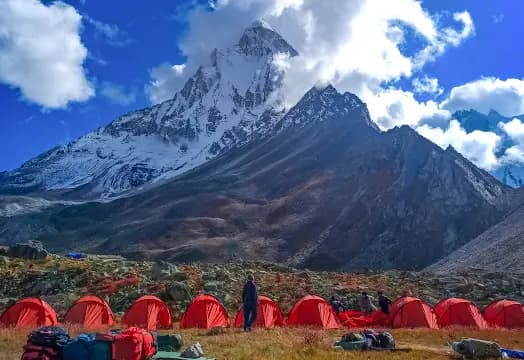
There are, and there will be, countless journeys that you will go on throughout your lifetime, but only a few of them are going to stay close to your heart, and one of them will be the ‘Gaumukh Tapovan Trek’. A journey that will not only challenge your body, but it will also touch your soul. This 8-day journey will take you to the Garhwal region of Uttarkashi, where you will experience both adventure and spirituality in the mountains and gain a sense of peace in solitude.
5 Reasons Why Rupin Pass Should be Your Next Trek?
Just like some heartwarming movies you keep rewatching, there are places you hope to visit every once in a while. Those places have their own magic that can’t be expressed in words but can only be felt while being there. So, to give you a similar kind of experience, we have a place to recommend for you all.
Why We Never Let Trekkers Go Without Trekking Poles — And You Shouldn’t Either
Walking on the rugged, unknown terrain of the mountains is one of those few experiences that makes you feel very different yet calming inside. But to achieve that feeling, not only do you have to plan a trip to the mountain, you are also supposed to carry gear and other things that are important for trekking.
From Beginner to Challenging: Your Complete Guide to Expedition Grades
Standing at the base of any mountain, while staring at the peak of that mountain. A lot is felt by a trekker, from feeling stunned, admiration, to a quick rush of adrenaline, to scared, and then self-doubting yourself, asking - Can I really do this? When a trekker starts climbing a mountain, it’s not just always about claiming the peak. Often, trekking is more about learning and getting to know the mountains. After getting familiar with the mountains, you start understanding the challenges the mountains carry within themselves, and then you start ascending accordingly.
The Ultimate Guide to Expedition Grades and Techniques
In general, trekking in the mountains is always categorised as either climbing or walking on the mountain trails. But what a lot of people don’t realise is that with each different grade of expedition, the techniques of climbing and walking on the mountains also change. The thing is that to climb some high grade of mountains, more than basic skills and techniques of climbing are required to learn. In fact, the ‘technical climbing’? It is not just for high-grade level mountain expeditions; this kind of technical knowledge is quite useful even in the easy graded expedition to ensure the safety of the trekker throughout their trek.
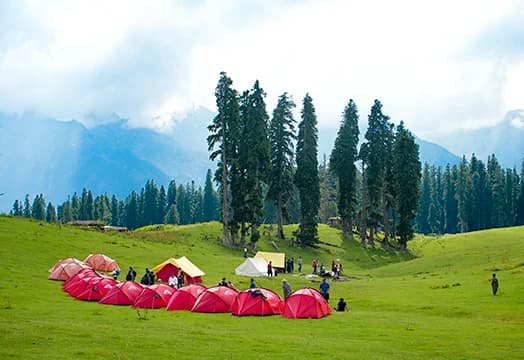
Why You Should Choose Trek the Himalayas Over Other Trekking Companies
Planning a trip is not an easy task, and when it comes to the mountains, a lot of factors need to be considered from a trekker's perspective. And when you are surrounded by all the hustle and bustle of life, planning a trip seems like too much work, right? Well, that’s exactly where trekking companies come into the picture. From booking to planning and ensuring that you receive a once-in-a-lifetime Himalayan experience, they make sure to make all these things happen. Now, after deciding that you want a trekking company to plan your trek, it’s time for you to pick the best trekking company in India to curate the itinerary for you. See, in today’s time, there are so many trekking companies out there who are ready to plan, manage, and guide you at every step of your journey, but who is best among them? That’s the real question. As a trekker, you might have thought several times, " Which company will truly help you out to become prepared for the Himalayas? Will they keep safety, food, and things like hygiene as their priority? Or if you are a female trekker, will it be safe and comfortable for you to trek with them or not?” And so on. These are exactly those points that draw a true comparison between Trek The Himalayas (TTH) and other trekking companies, viewing things from a trekker’s lens.
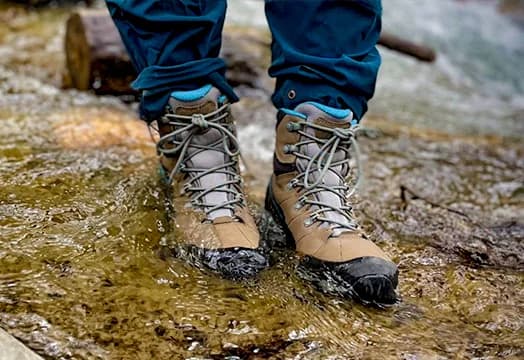
Your Ultimate Trekking Shoes Guide to Trek the Himalayas
There is one question that every trek leader asks their trekkers when they first meet them: Do they really understand the importance of trekking shoes for their trek? And usually, trekkers answer that they protect their feet, which is true. But do trekking shoes really help your feet in just “protection” and nothing else? Well, that is exactly what our trek leader (name) is going to enlighten us all about. First and foremost, it's essential to understand that trekking shoes are the foundation of a good trekking experience. If you are not carrying good quality shoes, then no matter how confident, strong, or motivated you are. You are bound to slip or slow down while walking on your trek. And as someone who has spent years climbing up and down the Himalayan trail several times. There is one thing that he said with complete certainty: The right trekking shoes can make or break your trek.
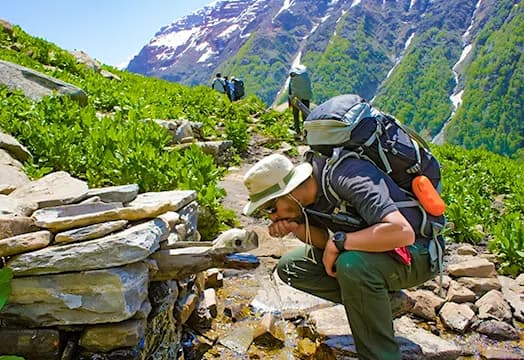
Hydration Can Make or Break Your Trek: Trek Leader’s Tips for Every Season
The main highlight of any trek journey will always be either the places you get to explore or the views that you will get to witness only once in your life. But to explore and experience all that scenic beauty, you must remain safe and healthy, which can be possible only if you do the proper intake of nutrients, and most importantly, of all consume water in a perfectly adequate amount. It’s an obvious yet the most ignored fact that Hydration is very important for trekking, it’s like the backbone of the whole trip. Which is why every trek leader’s first question at the start or end of their trek is - How much water did you drink today? Half of the time, the pattern of the answer remains the same, where some of them just give sheepy smiles, some tell numbers but are in doubt, and some of them have no idea whether they have drunk it at all or not.
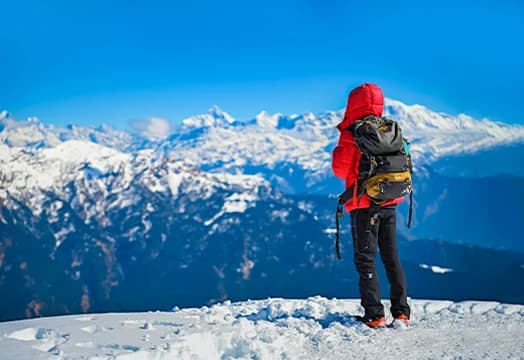
Pro Tips to Defeat the Winter Cold: Essential Guide by Trek Leader
Every year, hundreds of trekkers go on a winter trek specifically to enjoy and witness the snow-covered landscapes, stunning panoramic mountain views, and experience the serene beauty of nature. However, as they focus more on the enjoyment aspect of their journey, they sometimes overlook small details while preparing for their winter trek adventure. And the most missed details by trekkers are - not equipping themselves properly with winter trekking essentials, which will help them in staying warm during a winter trek. I mean, we all know that cold never suddenly comes in; it slowly starts creeping into the weather. When you are wearing your socks, at first you will feel chills in your body, then when you stop moving, a warmth will settle, and as you keep progressing in your trek, you will also start feeling colder. In one moment, you’re admiring frost-covered tree views, and in the other, you will be wondering why your fingers have started feeling numb suddenly despite wearing gloves.
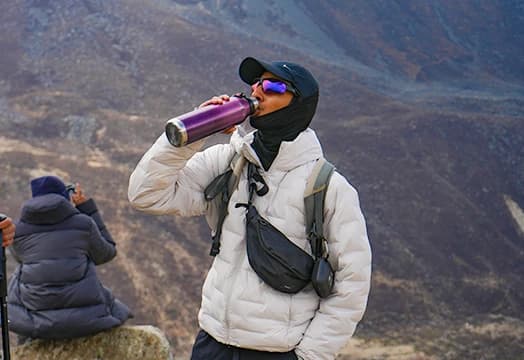
Essential Tips for Staying Hydrated on Winter Treks
Hydration plays a vital role in ensuring a safe and successful Himalayan trek. Whether you're adjusting to altitude or braving cold winter conditions, staying hydrated is key to maintaining physical performance, cognitive function, and overall well-being. Dehydration can lead to muscle cramps, cognitive impairment, and increased risk of altitude sickness, among other issues. In winter treks, hydration challenges such as reduced thirst, freezing water sources, and respiratory fluid loss become prominent. This article explores the importance of hydration, tips for staying hydrated in winter treks, and practical strategies like using insulated water bottles, monitoring fluid intake, and balancing electrolytes to ensure an enjoyable, well-hydrated trek.