
.webp)
Ladakh Scenic Circuit – Leh, Nubra & Pangong
Ladakh Scenic Circuit – Leh, Nubra & Pangong
Ladakh

Location
Ladakh

Duration
6 days

Max Altitude
18380 ft

Trekking
— km

Grade
Easy
Get in Touch with Our Trek Expert
Monday–Saturday: 10 AM to 06 PM (GMT +5:30)
Location
Ladakh
Duration
6 days
Max Altitude
18380 ft
Trekking km
— km
Grade
Easy
Get in Touch with Our Trek Expert
Monday–Saturday: 10 AM to 06 PM (GMT +5:30)
Overview
Special Offer
Ladakh Scenic Circuit – Leh, Nubra & Pangong
Because Leh’s beauty can not be explained in words, and obviously can never be known until witnessed.
We have a wide range of Ladakh treks, and many trekkers who love Ladakh whole heartily. But when they trek, they always get sad for only one thing, that is they do not fully get to see the beauty of Ladakh. They realise the region is so vast and beautiful that a single trek is not enough to see it all. There is always another sight to explore or another blue lake waiting just around the corner. To experience Leh Ladakh fully, you have to see it with your own eyes. And with an easy and well planned tour, we have got the Leh Sightseeing surprise for you.
Ladakh Scenic Circuit – Leh, Nubra & Pangong is our 5 nights and 6 days tour package. You will visit Leh's major landmarks and witness what Leh charm really is.
Leh’s Sightseeing Treasures:
Leh Palace The palace is a 17th century castle built right into the mountains. It feels like you are walking in a large maze, and from the top, the whole city looks like a Japanese illustrated town.
Shanti Stupa Not so far is the Shanti stupa, a must visit sightseeing place on the Leh tour. It is a white domed structure located on a hilltop and you will particularly love the sunsets from here.
Hall of Fame This is a proud museum run by the Indian Army. It tells the brave stories of soldiers and also shows you how people live in the freezing Ladakhi winters. It’s a must visit to understand the bravery of our soldiers.
Spituk Monastery The monastery was built in the 11th century and is one of the oldest monasteries in Ladakh. You will get to see the Budha idols and ritual objects used by monks during prayers. The monastery also has rooms where monks live and study and you will love the peace that this place provides.
Magnetic Hill This is nature’s own magic trick! If you park a vehicle at a specific spot here and turn off the engine, the vehicle starts to appear to roll uphill all by itself. It’s a "gravity-defying" mystery that everyone has to see to believe.
Gurudwara Pathar Sahib A very holy place built in memory of Guru Nanak Dev Ji. It is one of the most important Sikh pilgrimage sites and known for a boulder that bears the imprint of Guru Nanak Dev Ji’s body. You’ll always find soldiers of the Indian Army serving hot tea and snacks to every traveler who stops by.
Sangam It is where two big rivers, the Indus and the Zanskar meet. You can actually see the two different colors of water flowing together. Indus looks like greenish blue or muddy brown in color and zanaskar looks turquoise. Definitely an eye-catching sight!
Khardung La & Chang La Top These are the biggest gateways of your Leh Ladakh tour. Khardung La is one of the highest roads in the world! And Chang La is another high pass you will cross on your way to the lake. If you love high mountains then that experience you will get to live here!
Diskit Monastery Now this monastery is known for its 106 foot tall Maitreya Buddha statue and is one of the largest and oldest monasteries in Nubra valley. You will love to see how colorful and tall it is. And from the hilltop, you also see the entire valley and Shyok river below.
Sand Dunes & Hunder Village You might expect snow in Ladakh, but would you expect a desert? In Nubra Valley, Hinder village is famous for its “cold desert” and sand dunes where you can ride double-humped camels. It feels like being in the Middle East but with freezing Himalayan air.
Shyok River Route Instead of a regular road, you will drive alongside the beautiful Shyok River. The river looks bluish in color and beautifully goes through the mountains. This sight makes the drive so happening and turns the journey into one of the highlights of the trip.
Lukung Lukung is like the “front door” to the world famous Pangong lake. It is the very first sight where you get to see that unbelievable shiny blue water. Mostly people just drive past but if you stop here, you will find the shoreline. It is a spot where you just stand still and realize you have finally reached one of the most beautiful lakes on Earth.
Pangong Lake This is the star attraction of the Leh Ladakh tour. The lake is very famous for its changing colors. Sometimes it is light blue, then green, then bright indigo. It is still and so vast that it looks like a big mirror reflecting the sky.
3 Idiots Shooting Point And if you have seen the movie 3 Idiots, you will recognize this spot immediately! You can take fun photos with the famous yellow scooter and other props from the film.
3 Idiots School This is the real school from the 3 Idiots movie and its official name is Druk Padma Karpo. It got very famous from the movie and you can see the popular Rancho wall here. The structure and design of this school is also very attractive, you can see for yourself how beautifully it is built.
Shey Palace This was once the summer home of the kings of Ladakh and you can really feel the royal history here. The highlight is the gorgeous Shey Monastery inside, which houses a giant Shakyamuni Buddha statue made of copper and gold. The palace is three storeys high! And from the palace gardens, you get the very pretty views of the green fields.
Thiksey Gompa This is often called "Little Lhasa" because it looks just like the famous Potala Palace in Tibet. It is beautiful. It is colorful. And it is full of beauty and peace. Inside, you will find a 49-foot-tall Maitreya Buddha statue that is so colorful and detailed, it will leave you speechless. It is easily one of the most photographed spots in all of Leh Ladakh.
Leh Ladakh is a place you simply have to see for yourself. No matter how many stories you hear, nothing beats being there and looking at those big mountains and pretty places with your own eyes. So, don't wait any longer!
Travel tip: Because these places are very high up, the weather changes frequently. The secret to enjoying every bit of this sightseeing is to keep drinking water and take it slow.
Arrival in Leh
- Altitude: 11,500 ft
- Distance: 5–6 km
- Meals: Dinner
- Accommodation: Hotel in Leh
Leh local sightseeing
- Altitude: 11,500 ft
- Distance: Approx. 80–90 km
- Meals: Breakfast & Dinner
- Accommodation: Hotel in Leh
Leh - Hunder (Nubra Valley)
-
Altitude:
- Khardung La Pass – 18,380 ft
- Nubra Valley – 10,000 ft
- Distance: Approx. 120–125 km
- Meals: Breakfast & Dinner
- Accommodation: Camp / Hotel in Nubra Valley
Nubra Valley to Pangong Lake via Shyok River
- Altitude: Pangong Lake – 14,270 ft
- Distance: Approx. 250–270 km
- Meals: Breakfast & Dinner
- Accommodation: Tent at Pangong Lake
Pangong Lake to Leh
- Altitude: Chang La Pass – 17,590 ft
- Distance: Approx. 160–180 km
- Meals: Breakfast & Dinner
- Accommodation: Hotel in Leh
Departure from Leh
- Altitude: 11,500 ft
- Distance: 5–6 km
- Meals: Breakfast
- Blood Pressure Reading must be in between (DIASTOLIC 70 – 90, SYSTOLIC 100 - 150 mm Hg).
- Medical & Disclaimer Form (Mandatory Documents) Click here to download Medical & Disclaimer Form
How to reach — Maps
.webp)
It is essential for everyone to arrive at Leh (01:00 pm)
Upon booking the trek, your trek coordinator will furnish you with the hotel details.
Choose any option to reach Leh
- The easiest and best way to travel is to fly to Kushok Bakula Rimpochi Airport located in Leh. It is just 4 km away from the main city. The airport is well connected to Delhi and also receives flights from Mumbai, Srinagar, Jammu, Chandigarh, and other general destinations in India. Even international travelers can fly directly from major cities like Kolkata, Mumbai, and Delhi. You can find taxis outside the airport or book a cab to reach the required destination.
- There are two road routes to Leh
- Manali (Himachal Pradesh ) to Leh via Baralacha La, Lachulung La and Tanglang La and It covers a distance of 500 km.
- Srinagar to Leh via Zoji La, Lamayuru Lunar Landscape and Kargil and It covers a distance of 450 km.
- You cannot reach Leh directly by train as there is no train station in Ladakh. The nearest railway station is Jammu Tawi (700 km from Ladakh) which is well connected with Delhi, Kolkata and Mumbai.
For your return journey from Leh, you have the flexibility to choose between road or air transport options. Please note that our services extend only to the hotel, and the standard hotel check-out time is 11:00 am, if you opt for an air transport then please ensure an early check-out in the morning, as all flights operate during the morning hours
It's highly advisable to keep 2 buffer day in your travel plan. If the buffer day is not needed, it can be used to explore Leh.
1. Accommodation (as per the itinerary):
- Room on Double sharing basis| As per the Itinerary | Triple sharing in rare cases
- 03 Night stay at the hotel in Leh
- 01 Night stay at Deluxe Tent in Nubra Valley
- 01 Night stay at Deluxe Tent in Pangong Lake
2. Meals:
- Welcome drinks on arrival.
- Breakfast & Dinner are included at all places.
3. Support:
- 1 Versatile base camp manager: handles communication and deploys extra manpower in emergencies.
- 1 Driver cum tour guide.
4. First aid:
- Medical kit with Oxygen cylinder
5. Transportation as per the itinerary:
- Airport pickup and drop-off.
- Complete transportation by Ertiga or similar, including all sightseeing and intercity transfers as mentioned in the program.
7. Driver allowances, Road tax, and Fuel charges
8. Inner Line Permit for Nubra Valley and Pangong Lake.
Trek Essentials
Cancellation Terms
To request a cancellation, please email us at info@trekthehimalayas.com using your registered email ID.
Cancellations prior to 25 days from the start of the Trip
Refund Options
- 5% deduction of trek fee
- 100% trek fee cash voucher for any trip till one year
- Transfer your trek (any trek, any date) to your friend
Cancellation between 24 days and 15 days to the start of the Trip
Refund Options
- 30% deduction of trek fee
- 100% trek fee cash voucher for same trip till one year
- 85% trek fee cash voucher for any trip till one year
- Transfer your trek (same trek, any date) to your friend
Cancellation between 14 days and 10 days to the start of the Trip
Refund Options
- 50% deduction of trek fee
- 80% trek fee cash voucher for same trip till one year
- 70% trek fee cash voucher for any trip till one year
- Book the same trek, in the same season, with any other batch
- Transfer your trek (same trek, any date) to your friend
Cancellation less than 9 days to the start of the trek.
Refund Options
- No cash refund
- 20% trek fee cash voucher for the same trip till one year
- 10% trek fee cash voucher for any trip till one year
- Transfer your trek (same trek, same date) to your friend
- To reschedule a trek (same trek only), a 30 % rescheduling fee of the trek cost will apply.
Cancellation Policy (Emergency Cases):
In case of a death in the immediate family (parents, siblings, spouse, children) or if the trekker is hospitalized (min. 48 hours) or suffers a fracture (leg/arm) within a week before the trek, even if canceled a day before:
90% trek fee refund in cash & 10% as a voucher (valid for 1 year, for any India trek).
Valid documents required. We’re here to support you during tough times.
Note:
- Change of trek batch is dependent on the availability of seats in the batch
- In case of transferring a trek to a friend, he/she should satisfy all the mandatory requirements put forward by TTH
- TTH holds the right to change/cancel the policies, without prior notice
Booking and Payments
- The Participant is responsible for verifying the accuracy of all details, including Trip dates and personal documentation, at the time of booking.
- Payments must be made in accordance with the timelines and instructions provided by TTH. Late payments may result in cancellation of booking without refund.
- In the event of a cash refund, only the portion of the payment made in cash shall be eligible for refund in cash. Any booking made using voucher, discounts, promotional codes, or through any non-cash mode of payment shall not be eligible for a cash refund under any circumstances.
- Refunds, if applicable, shall be processed within 15–30 working days of confirmation.
- All add-on bookings are subject to the respective add-on cancellation policy, and refunds will be processed accordingly.
- Voucher Terms
- This is a non-transferable voucher
- The voucher cannot be merged with any other offer of Trek The Himalayas
- The voucher is valid for Trek booked directly with Trek The Himalayas in India
- To avail the voucher please use your register phone number or e-mail id
- All the other Terms of booking a trek with Trek The Himalayas are applicable to the voucher
Itinerary and Modifications
- TTH reserves the right to modify, shorten, or cancel any part of the Trip due to transportation delays, weather, health emergencies, or other unforeseen circumstances including Force Majeure.
Cancellations and Refunds
- No refunds or vouchers, partial or otherwise, shall be provided for voluntary withdrawal, non-utilisation of services, or removal from the Trip.
- If TTH cancels the Trip before arrival at the designated pick-up point due to unforeseen circumstances or Force Majeure, the Participant may choose from:
- An alternate Trip/date.
- A credit voucher valid for one (1) year.
- Transfer to another Trip, with cost differences payable by the Participant.
- If the Trip is abandoned post-arrival at the designated pick-up point, no cash refund or voucher shall be issued. The Trek Again Policy may apply at TTH’s discretion.
- TTH shall not be liable for any associated travel costs such as flights, accommodation, or visa fees.
Force Majeure
- Events beyond its control including but not limited to earthquakes, landslides, strikes, curfews, war, pandemic, government restrictions, heavy rainfall or snowfall, windstorms, road blockages, trail disruption, or withdrawal of permits, TTH shall not be held liable for any cancellation, delay, or service modification caused by Force Majeure.
none
Frequently Asked Questions (FAQ)

Because summers are the best time for this tour, we recommend visiting from May to September. The weather is cozy and perfect for sightseeings! But make sure you keep layers with you as night can get cold.
Yes, kids and elders can go on the Leh tour. Since leh is at high altitude, we suggest taking it slow and give your body a good time to adjust. At TTH, we plan the tour with proper rest that helps the body in the acclimatisation process.
The beautiful Leh places can be covered easily in 5 nights and 6 days. You will cover all the famous places like Pangong lake, Nubra valley, monasteries, magnetic hills, the 3 idiot school shooting point and more. Even if you have a tight schedule, we also have 4 nights and 5 days options that include these places.
In the 5 nights and 6 days Leh tour package, you will visit Leh Palace, Shanti Stupa, Hall of Fame, Spituk Monastery, Magnetic Hill, Gurudwara Pathar Sahib, the Sangam (confluence of rivers), Khardung La Top, Diskit Monastery, the sand dunes, Hunder village, Lukung (the starting point of Pangong Lake), and the famous 3 Idiots shooting point.
Along with the places mentioned above, this tour also covers Nubra Valley in more detail, Chang La Top (en route), the famous 3 Idiots school, Shey Palace, and Thiksey Gompa. This way, you will see the very best of Ladakh!
In the 4 nights and 5 days tour package, you will visit: Leh Palace, Shanti Stupa, Hall of Fame, Spituk Monastery, Magnetic Hill, Gurudwara Pathar Sahib, Sangam (confluence of rivers), Khardung La Top, Diskit Monastery, sand dunes and Hunder Village in Nubra Valley, Lukung (Pangong Lake starting point), and the 3 Idiots shooting point.
In the 5 nights and 6 days tour package, along with the above places, this Nubra Valley in more detail, Chang La Top (en route), the 3 Idiots school, Shey Palace, and Thiksey Gompa, giving you more time to explore Ladakh at a relaxed pace.
The weather is pretty good during the day and at night it could get colder. The weather can also change quickly, make sure you carry good warm clothes and sun protections too.
In short,
- Daytime are: pleasant and sunny.
- Nights are: cold, even in summer.
It is. Since this is a tour, and most travel is done by vehicle, first timers can enjoy it comfortably. At TTH, we keep the first day light, focusing on rest and short walks only. This helps your body adjust naturally to the altitude.
You do not need very high fitness for a Leh tour. Basic fitness is enough, as most travel is done by vehicle. However, being healthy and able to walk short distances comfortably helps. We always suggest light walking, light meals, proper rest, and following acclimatisation tips for a smooth experience.
Yes, in certain places like Nubra valley and Pangong lake in Leh Ladakh, you need an Inner Line Permit (ILP). The permits are easy to obtain and when you book with TTH, we take care of all the documents procedures, so you don't have to worry about it.
You can keep summer clothes for the day and warm clothes for the evening and night. Even in summer, the sun is very strong during the day but it gets cold at night. Sunglasses, sunscreen, and a cap are also useful because the sun can be strong.
The golden rule is to rest and follow basic precautions.
- Rest completely for around 24 hours after you land in Leh.
- Do not visit any high altitude points during the 1st and 2nd days.
- Keep layers for the colder nights.
- Drink lots of water.
- Eat light meals.
- Avoid any heavy work to prevent strain on the body.
Rest is important because Leh is at a high altitude region and the body needs time to adjust to the lower oxygen levels. Proper rest helps in preventing any sickness related altitude, such as AMS. If you check the TTH itineraries, you will see how each day is divided and planned with gradual altitude gain.
No, chances of AMS are low on a Leh tour if you follow proper acclimatisation.
Yes, ATMs are available in Leh town. It is also best to carry enough cash with you, as ATMs are limited or not available in remote areas like Nubra Valley and Pangong Lake.
TTH uses well maintained vehicles such as Innova, Ertiga, Xylo, or for larger groups, Mazda (minibus) or similar, depending on the group size. These vehicles are suitable for mountain roads and ensure a smooth journey throughout the Leh tour.
You will stay in great accommodations at different places during the Leh tour. In Leh town, stays are usually in hotels or guesthouses, while near Pangong lake, you stay in tented cottages. All accommodations are clean and well suited to the region.
The Leh tour is easy to moderate. Since most of the travel is done by vehicle, it does not require high fitness. With good rest and well planned itinerary, the tour is best suitable for the travellers.
TTH follows well-planned itineraries with gradual altitude gain and regular health monitoring. Tour leaders are trained to recognise early symptoms of altitude discomfort and guide travellers accordingly. Immediate support and local medical assistance are available if required.
Loading media...
Ladakh Scenic Circuit – Leh, Nubra & Pangong Video Testimonials
Hear Trekkers Share Their Ladakh Scenic Circuit – Leh, Nubra & Pangong
Must Read Articles
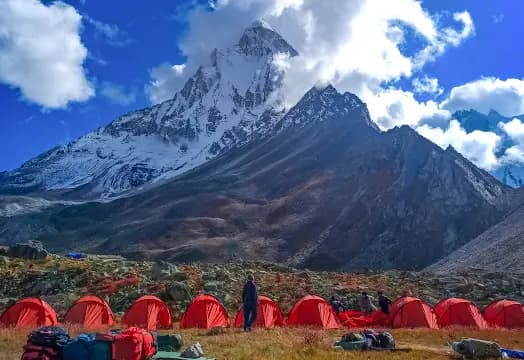
Trek to the Holy Glaciers: Gaumukh Tapovan Trek Highlights
There are, and there will be, countless journeys that you will go on throughout your lifetime, but only a few of them are going to stay close to your heart, and one of them will be the ‘Gaumukh Tapovan Trek’. A journey that will not only challenge your body, but it will also touch your soul. This 8-day journey will take you to the Garhwal region of Uttarkashi, where you will experience both adventure and spirituality in the mountains and gain a sense of peace in solitude.
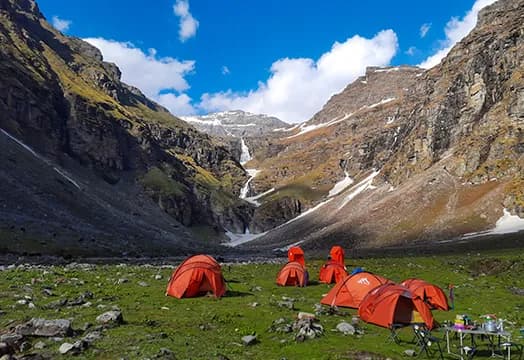
5 Reasons Why Rupin Pass Should be Your Next Trek?
Just like some heartwarming movies you keep rewatching, there are places you hope to visit every once in a while. Those places have their own magic that can’t be expressed in words but can only be felt while being there. So, to give you a similar kind of experience, we have a place to recommend for you all.
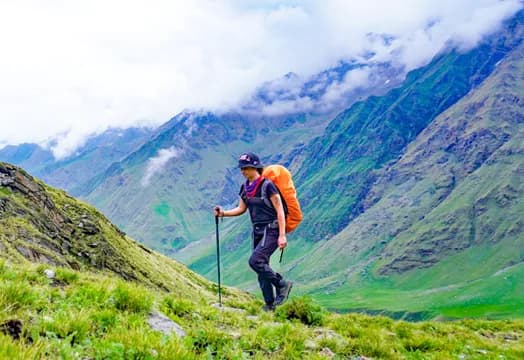
Why We Never Let Trekkers Go Without Trekking Poles — And You Shouldn’t Either
Walking on the rugged, unknown terrain of the mountains is one of those few experiences that makes you feel very different yet calming inside. But to achieve that feeling, not only do you have to plan a trip to the mountain, you are also supposed to carry gear and other things that are important for trekking.
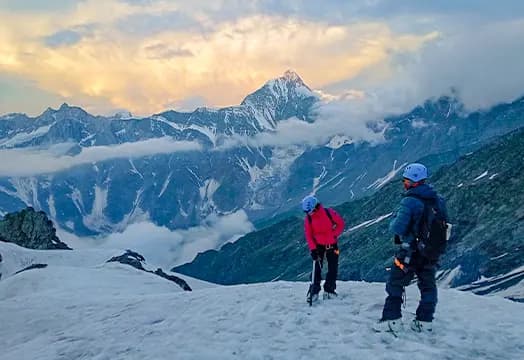
From Beginner to Challenging: Your Complete Guide to Expedition Grades
Standing at the base of any mountain, while staring at the peak of that mountain. A lot is felt by a trekker, from feeling stunned, admiration, to a quick rush of adrenaline, to scared, and then self-doubting yourself, asking - Can I really do this? When a trekker starts climbing a mountain, it’s not just always about claiming the peak. Often, trekking is more about learning and getting to know the mountains. After getting familiar with the mountains, you start understanding the challenges the mountains carry within themselves, and then you start ascending accordingly.
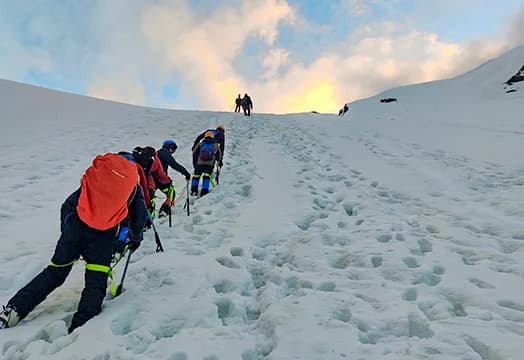
The Ultimate Guide to Expedition Grades and Techniques
In general, trekking in the mountains is always categorised as either climbing or walking on the mountain trails. But what a lot of people don’t realise is that with each different grade of expedition, the techniques of climbing and walking on the mountains also change. The thing is that to climb some high grade of mountains, more than basic skills and techniques of climbing are required to learn. In fact, the ‘technical climbing’? It is not just for high-grade level mountain expeditions; this kind of technical knowledge is quite useful even in the easy graded expedition to ensure the safety of the trekker throughout their trek.
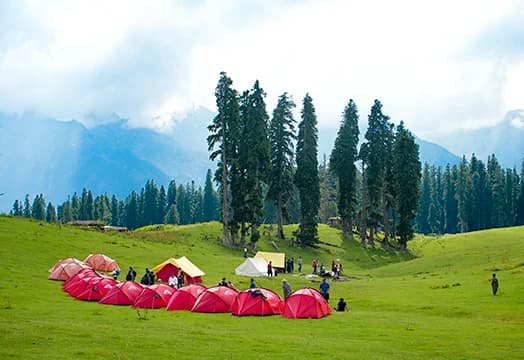
Why You Should Choose Trek the Himalayas Over Other Trekking Companies
Planning a trip is not an easy task, and when it comes to the mountains, a lot of factors need to be considered from a trekker's perspective. And when you are surrounded by all the hustle and bustle of life, planning a trip seems like too much work, right? Well, that’s exactly where trekking companies come into the picture. From booking to planning and ensuring that you receive a once-in-a-lifetime Himalayan experience, they make sure to make all these things happen. Now, after deciding that you want a trekking company to plan your trek, it’s time for you to pick the best trekking company in India to curate the itinerary for you. See, in today’s time, there are so many trekking companies out there who are ready to plan, manage, and guide you at every step of your journey, but who is best among them? That’s the real question. As a trekker, you might have thought several times, " Which company will truly help you out to become prepared for the Himalayas? Will they keep safety, food, and things like hygiene as their priority? Or if you are a female trekker, will it be safe and comfortable for you to trek with them or not?” And so on. These are exactly those points that draw a true comparison between Trek The Himalayas (TTH) and other trekking companies, viewing things from a trekker’s lens.
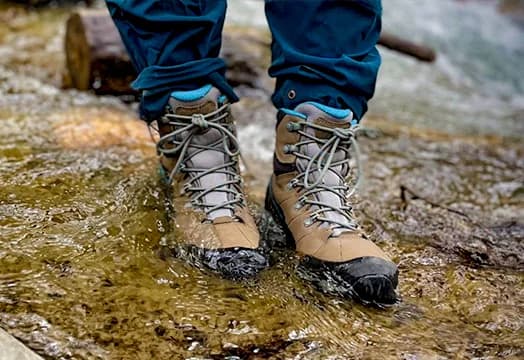
Your Ultimate Trekking Shoes Guide to Trek the Himalayas
There is one question that every trek leader asks their trekkers when they first meet them: Do they really understand the importance of trekking shoes for their trek? And usually, trekkers answer that they protect their feet, which is true. But do trekking shoes really help your feet in just “protection” and nothing else? Well, that is exactly what our trek leader (name) is going to enlighten us all about. First and foremost, it's essential to understand that trekking shoes are the foundation of a good trekking experience. If you are not carrying good quality shoes, then no matter how confident, strong, or motivated you are. You are bound to slip or slow down while walking on your trek. And as someone who has spent years climbing up and down the Himalayan trail several times. There is one thing that he said with complete certainty: The right trekking shoes can make or break your trek.
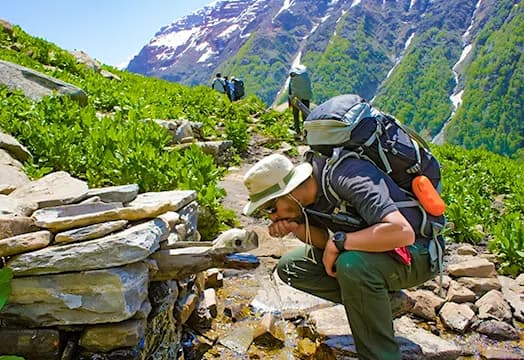
Hydration Can Make or Break Your Trek: Trek Leader’s Tips for Every Season
The main highlight of any trek journey will always be either the places you get to explore or the views that you will get to witness only once in your life. But to explore and experience all that scenic beauty, you must remain safe and healthy, which can be possible only if you do the proper intake of nutrients, and most importantly, of all consume water in a perfectly adequate amount. It’s an obvious yet the most ignored fact that Hydration is very important for trekking, it’s like the backbone of the whole trip. Which is why every trek leader’s first question at the start or end of their trek is - How much water did you drink today? Half of the time, the pattern of the answer remains the same, where some of them just give sheepy smiles, some tell numbers but are in doubt, and some of them have no idea whether they have drunk it at all or not.
Pro Tips to Defeat the Winter Cold: Essential Guide by Trek Leader
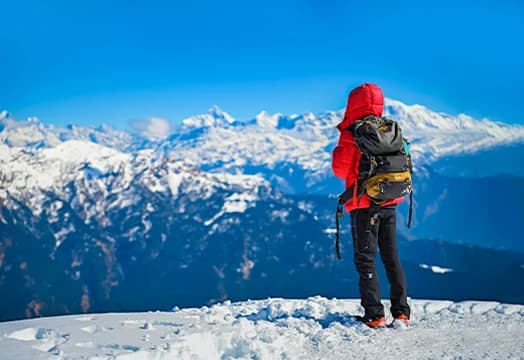
Every year, hundreds of trekkers go on a winter trek specifically to enjoy and witness the snow-covered landscapes, stunning panoramic mountain views, and experience the serene beauty of nature. However, as they focus more on the enjoyment aspect of their journey, they sometimes overlook small details while preparing for their winter trek adventure. And the most missed details by trekkers are - not equipping themselves properly with winter trekking essentials, which will help them in staying warm during a winter trek. I mean, we all know that cold never suddenly comes in; it slowly starts creeping into the weather. When you are wearing your socks, at first you will feel chills in your body, then when you stop moving, a warmth will settle, and as you keep progressing in your trek, you will also start feeling colder. In one moment, you’re admiring frost-covered tree views, and in the other, you will be wondering why your fingers have started feeling numb suddenly despite wearing gloves.
Essential Tips for Staying Hydrated on Winter Treks
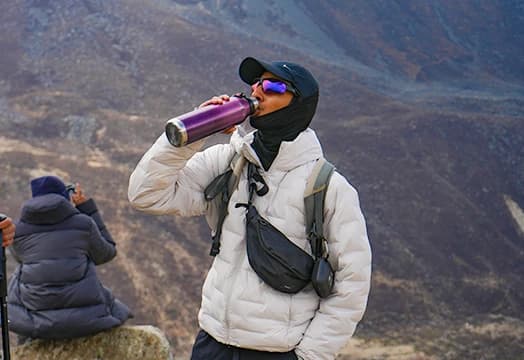
Hydration plays a vital role in ensuring a safe and successful Himalayan trek. Whether you're adjusting to altitude or braving cold winter conditions, staying hydrated is key to maintaining physical performance, cognitive function, and overall well-being. Dehydration can lead to muscle cramps, cognitive impairment, and increased risk of altitude sickness, among other issues. In winter treks, hydration challenges such as reduced thirst, freezing water sources, and respiratory fluid loss become prominent. This article explores the importance of hydration, tips for staying hydrated in winter treks, and practical strategies like using insulated water bottles, monitoring fluid intake, and balancing electrolytes to ensure an enjoyable, well-hydrated trek.