

Stok Kangri Peak Trek Expedition
Stok Kangri Peak Trek Expedition
Ladakh

Location
Ladakh

Duration
9 days

Max Altitude
20180 ft

Trekking
40 km

Grade
Challenging
Get in Touch with Our Trek Expert
Monday–Saturday: 10 AM to 06 PM (GMT +5:30)
Location
Ladakh
Duration
9 days
Max Altitude
20180 ft
Trekking km
40 km
Grade
Challenging
Get in Touch with Our Trek Expert
Monday–Saturday: 10 AM to 06 PM (GMT +5:30)
Overview
Special Offer
Why Stok Kangri is a Must-Do Trek?
One of the most fascinating places on the planet is Stok Kangri that lies in the beautiful area of Ladakh. Ladakh is located in the northern state of India and is famous for compassion and support of its residents. Leh the capital of Ladakh is situated at the height of 3500-3800 mts of sea level and the most adventurous place for the trekking lovers Trekking in Leh is the best option for trekking in India and hence it attracts tourist from every corner of the world. Stok Kangri is one such peak that has gain tremendous popularity in the last few years. Illustrating the Himalayan range with a wider perspective, this trek embrace deserted surroundings and offer its trekkers the opportunity to experience the complete peace. The entire trail has incorporated many ridges so you can feel the sudden change in scenery. In winter, the whole landscape attains a perfect magnificence. Stok Kangri peak provides you the entire view of Zanskar and the Indus Valley.
About Stok Kangri Trek
Your trek starts with the arrival from Delhi to Leh. Spend some time to acclimatize with the beauty and weather. Leh is the place where you get the perfect combination of natural exquisiteness with cultural beauty. The whole path to the Stok Village is full of natural grandeur and flourishing green trees.
From Changa Ma, you will go to Base Camp. Set up in a grassy area, it is a place that gives pleasure to everyone.This exotic area has many water bodies. Staying here in the tents is a life time opportunity. You will rest here for one complete day and get adequate knowledge about all the possibilities and challenges of the trek from your guide. From here, you will trek to your destination Stok Kangri.
Ascend climbing for 9-10 hours and you will reach at the top of the ridge. Standing at the summit, you can view the Karakoram Range to your north and Zanskar Range to your south. At your front, the extensive and open ground provides you a regal feel. This trek offers you the incredible trekking experience. We are the Best Trekking Company in India providing the finest customized deals to trekkers worldwide. We develop a schedule as per your requirements and needs. With us, you will experience the best trekking excursion every time. We not only plan your trip, but take care of every issue no matter big or small. Our motto is to create the most excellent trekking experience of your life. Simply give us a call and leave everything on our professionals. Call us..Today..!!
Arrival Leh
- Altitude:- 3500 m/11,500 ft.
- Check in Hotel.
- Briefing about the trek at 5 pm (mandatory).
- Bring a copy of ID proof and 2 photo graphs foreigner, a copy of passport and visa.
- Network is available (only post-paid).
- ATM is available.
- Can purchase or rent trekking equipment from Leh.
- Visit of any very high altitude place or pass is not advisable.
- Consumption of alcohol and smoking is strictly prohibited.
- Stay in hotel.
Leh (Acclimatization day)
- Acclimatization and sightseeing in Leh.
- Can visit to monasteries: Shey, Thiksey, Sangam, and Hemis.
- Avoid River Rafting, You can plan it after your trek.
- Visit of any very high altitude place or pass is not advisable.
- Stay in hotel.
Leh to Chang Ma via Stok Village
- Altitude:- 4,000 m/13,200 ft.
- Stok Village:- 3,500 m/11,500 ft.
- Leh to Stok Village:- Drive 15 km, 35 minutes.
- Trek 6 km, 4-5 hrs.
- Altitude Gain:500m/ 1,700ft.
- Moderate level of ascent.
- Can refill water from river.
- Hot lunch at camp site.
- Night stay in tent.
Chang Ma to Mankorma
- Altitude:- 4,400 m/14,400 ft.
- Trek 4 km, 3 hrs.
- Altitude Gain: 400m// 1,200ft.
- Easy level of ascent.
- Can refill water from river.
- Hot lunch at camp site.
- Night stay in tent.
Mankorma to Base camp
- Altitude:- 5,000 m/16,350 ft.
- Trek 5 km, 6 hrs.
- Altittude Gain: 600m/1,950ft.
- Moderate to difficult level of ascent.
- Till first half can refill water from river and rest there is no water point.
- Hot lunch at camp site.
- Night stay in tent.
Rest day + training day
- TTH team will issue you the technical equipments.
- Learn how to use technical equipments.
- Briefing and planning for the summit.
- Don’t exhaust your body, take rest as much as you can.
- Push for the Summit at 10 pm (Timings may get change).
Base camp to Stok Kangri back to Base camp
- Altitude:- 6155 m/20,190 ft
- Trek 7 km each way, 12-14 hrs
- Reach on the Summit by 6 am
- Reach to Base camp by 12 noon
- Packed breakfast and hot lunch at camp site
- Carry enough hot water, only one water point at glacier(very cold)
Route:-
- Base camp to first rest point:- 35-45 min, Steep ascent.
- Rest point to ABC:- 45 min, Gradual ascent.
- To Glacier crossing point:- 40 min, almost flat walk.
- To start of slope:- 20-35 min, moderate to difficult ascent. ...
Base camp to Stok Village and drive to Leh
- Trek 15 km, 6 hrs.
- Drive 15 km, 35 minutes.
- Water available on the way.
- Packed lunch.
- Reach Leh by 5 pm.
- Check in Hotel.
Buffer day
- Buffer day will be used if unable to summit due to of any unforeseen circumstances.
- Opting a buffer day will be a team decision not an individual.
- Keep a buffer day in your travel plan.
- Buffer day is not included in the cost.
- Rs 2,600 has to pay, per day and per person.
- Please make any further travel plan on Day 10.
- If buffer day is not used in the Expedition then it can be used to explore Leh.
- Rafting in Zanskar
- Mountain Biking ...
- Pulse rate at rest must be in between (60 to 100 beats per minute).
- Blood Pressure Reading must be in between (DIASTOLIC 75 – 85, SYSTOLIC 100 - 130 mm Hg).
- Respiratory rate at rest must be in between (12 to 20 breaths per minute).
- Should not have Liver and kidney issues.
- Should not have Diabetes Mellitus, Bronchial Asthma, Heart problems, Hypertension, etc.
- No pacemaker implant.
- People with Sinus issues, Epilepsy please contact to trek coordinator before booking the trek.
- If your BMI is not normal, Please contact our Trek coordinator before Trek booking.
Medical & Disclaimer Form (Mandatory Documents) Click here to download Medical & Disclaimer Form
How to reach — Maps
.webp)
It is essential for everyone to arrive at Leh (01:00 pm)
Upon booking the trek, your trek coordinator will furnish you with the hotel details.
Choose any option to reach Leh
- The easiest and best way to travel is to fly to Kushok Bakula Rimpochi Airport located in Leh. It is just 4 km away from the main city. The airport is well connected to Delhi and also receives flights from Mumbai, Srinagar, Jammu, Chandigarh, and other general destinations in India. Even international travelers can fly directly from major cities like Kolkata, Mumbai, and Delhi. You can find taxis outside the airport or book a cab to reach the required destination.
- There are two road routes to Leh
- Manali (Himachal Pradesh ) to Leh via Baralacha La, Lachulung La and Tanglang La and It covers a distance of 500 km.
- Srinagar to Leh via Zoji La, Lamayuru Lunar Landscape and Kargil and It covers a distance of 450 km.
- You cannot reach Leh directly by train as there is no train station in Ladakh. The nearest railway station is Jammu Tawi (700 km from Ladakh) which is well connected with Delhi, Kolkata and Mumbai.
For your return journey from Leh, you have the flexibility to choose between road or air transport options. Please note that our services extend only to the hotel, and the standard hotel check-out time is 11:00 am, if you opt for an air transport then please ensure an early check-out in the morning, as all flights operate during the morning hours
It's highly advisable to keep 2 buffer day in your travel plan. If the buffer day is not needed, it can be used to explore Leh.
1. Accommodation (as per the itinerary):
- Guest house in Leh on Day 1, day 2 and day 8 as per the itinerary.
- Camping (Twin sharing basis).
2. Meals (Veg + Egg):
- Meals while on trek (Veg + Egg) as per the itinerary.
3. Support:
- 1 Versatile base camp manager: handles communication and deploys extra manpower in emergencies.
- 1 Mountaineering & First aid qualified professional trek Leader.
- 1 Experienced high altitude chef.
- Local experienced guides (Number of guides depending on the group size).
- Enough support staff.
4. Trek equipment:
- Sleeping bag, Sleeping liners (if required), Mattress, Utensils.
- 3 men all season trekker tent (twin sharing), Kitchen & Dining tent, Toilet tent.
- Camping stool, Walkie talkie.
- Ropes, Helmet, Ice axe, Harness, Gaiters & Crampon (if required).
5. First aid:
- Medical kit,Stretcher,Oxygen cylinder,Blood pressure monitor,Oximeter,Stethoscope.
6. Transportation (as per the itinerary):
- Transport from Leh guest house to Stock village and return as per the itinerary.
7. Mules/porters to carry the central luggage.
8. Cloakroom facility available at the base camp for additional luggage
9. All necessary permits are included, up to the amount charged for Indian nationals.
10. Services from Leh to Leh.
Trek Essentials
Cancellation Terms
To request a cancellation, please email us at info@trekthehimalayas.com using your registered email ID.
Cancellations prior to 25 days from the start of the Trip
Refund Options
- 5% deduction of trek fee
- 100% trek fee cash voucher for any trip till one year
- Transfer your trek (any trek, any date) to your friend
Cancellation between 24 days and 15 days to the start of the Trip
Refund Options
- 30% deduction of trek fee
- 100% trek fee cash voucher for same trip till one year
- 85% trek fee cash voucher for any trip till one year
- Transfer your trek (same trek, any date) to your friend
Cancellation between 14 days and 10 days to the start of the Trip
Refund Options
- 50% deduction of trek fee
- 80% trek fee cash voucher for same trip till one year
- 70% trek fee cash voucher for any trip till one year
- Book the same trek, in the same season, with any other batch
- Transfer your trek (same trek, any date) to your friend
Cancellation less than 9 days to the start of the trek.
Refund Options
- No cash refund
- 20% trek fee cash voucher for the same trip till one year
- 10% trek fee cash voucher for any trip till one year
- Transfer your trek (same trek, same date) to your friend
- To reschedule a trek (same trek only), a 30 % rescheduling fee of the trek cost will apply.
Cancellation Policy (Emergency Cases):
In case of a death in the immediate family (parents, siblings, spouse, children) or if the trekker is hospitalized (min. 48 hours) or suffers a fracture (leg/arm) within a week before the trek, even if canceled a day before:
90% trek fee refund in cash & 10% as a voucher (valid for 1 year, for any India trek).
Valid documents required. We’re here to support you during tough times.
Note:
- Change of trek batch is dependent on the availability of seats in the batch
- In case of transferring a trek to a friend, he/she should satisfy all the mandatory requirements put forward by TTH
- TTH holds the right to change/cancel the policies, without prior notice
Booking and Payments
- The Participant is responsible for verifying the accuracy of all details, including Trip dates and personal documentation, at the time of booking.
- Payments must be made in accordance with the timelines and instructions provided by TTH. Late payments may result in cancellation of booking without refund.
- In the event of a cash refund, only the portion of the payment made in cash shall be eligible for refund in cash. Any booking made using voucher, discounts, promotional codes, or through any non-cash mode of payment shall not be eligible for a cash refund under any circumstances.
- Refunds, if applicable, shall be processed within 15–30 working days of confirmation.
- All add-on bookings are subject to the respective add-on cancellation policy, and refunds will be processed accordingly.
- Voucher Terms
- This is a non-transferable voucher
- The voucher cannot be merged with any other offer of Trek The Himalayas
- The voucher is valid for Trek booked directly with Trek The Himalayas in India
- To avail the voucher please use your register phone number or e-mail id
- All the other Terms of booking a trek with Trek The Himalayas are applicable to the voucher
Itinerary and Modifications
- TTH reserves the right to modify, shorten, or cancel any part of the Trip due to transportation delays, weather, health emergencies, or other unforeseen circumstances including Force Majeure.
Cancellations and Refunds
- No refunds or vouchers, partial or otherwise, shall be provided for voluntary withdrawal, non-utilisation of services, or removal from the Trip.
- If TTH cancels the Trip before arrival at the designated pick-up point due to unforeseen circumstances or Force Majeure, the Participant may choose from:
- An alternate Trip/date.
- A credit voucher valid for one (1) year.
- Transfer to another Trip, with cost differences payable by the Participant.
- If the Trip is abandoned post-arrival at the designated pick-up point, no cash refund or voucher shall be issued. The Trek Again Policy may apply at TTH’s discretion.
- TTH shall not be liable for any associated travel costs such as flights, accommodation, or visa fees.
Force Majeure
- Events beyond its control including but not limited to earthquakes, landslides, strikes, curfews, war, pandemic, government restrictions, heavy rainfall or snowfall, windstorms, road blockages, trail disruption, or withdrawal of permits, TTH shall not be held liable for any cancellation, delay, or service modification caused by Force Majeure.
Government employees can avail the benefit of Special Casual Leave (SCL) when they join us for a trekking expedition. As per Pay Commission guidelines, up to 30 days of Special Casual Leave can be availed in a calendar year for trekking or mountaineering expeditions conducted through a registered organisation.
Trek The Himalayas is a registered adventure tour operator with the Indian Mountaineering Foundation (IMF) and the Ministry of Tourism (MoT), making your trek eligible for SCL benefits.
To apply, email us at info@trekthehimalayas at least 20 days before the trek departure date, with the following details:
- Trek name and trek date
- Booking details
- Full name
- Designation
- Department and department address
This benefit is exclusive to Indian Government employees and is applicable only for treks within India.
Frequently Asked Questions (FAQ)

No, currently Stok Kangri cannot be accessed to do any trekking or climbing. Ladakh local administration with the wildlife department has banned visiting of this peak so that the region gets time to recover its resources that were overwhelmed by environmental stress.
Stok Kangri can be seen as a high mountain difficult expedition. Although it used to be considered a non-technical climb, it has proven difficult due to the high altitude (more than 6000 meters or 20,000 feet), long summit push, steep terrain and unpredictability of the weather. You will be walking over bouldery ground, debris and skiing over snow. You must also possess such technical equipment as crampons and ice axes to make the ascent. This is a physically challenging trek, in which you need to be fit and able to trek at high altitude or even ideally have already done so.
Yes, you must have some trekking experience when you want to do something like Stok Kangri. You should have at least one or two high altitude treks at altitudes higher than 5,000 meters.
At least 2-3 months prior to going on a trek, you must start training. Increase your power of endurance by undertaking a cardiovascular exercise at least once a week that could include jogging, cycling, swimming or power walking. Add some weight training and practice stair climbing. Furthermore, it will be better to perform some exercises walking on the uneven surface to prepare yourself to walk in the mountains. The acclimatization is as important as the fitness levels. You must not rush it, you need to be very hydrated and your body needs to be acclimatized well.
The best months are July, August, and September. The sky is mostly clear, the view from the top can be fantastic. Nights can be still cold, snow can be found on the summit ridge. But since the trek is presently closed, you can take these months for future reference if and when it reopens.
Stok Kangri is a good mountaineering expedition and hence you would require the regular trekking essentials as well as some gear. You will require warm clothes, down jackets, trekking shoes with a good hold, gloves, headlamp, and sunglasses. To reach the summit, you have to wear crampons, a harness, gaiters, ropes, and on certain occasions, ice axes, all which are usually provided by the trekking operator. However, you need to train yourself on usage of these prior to the summit night and of course, you need to follow what your leader of the trek instructs.
The risk of altitude sickness is quite a serious issue in the course of the trek since Stok Kangri exceeds 6 000 meters. The level of oxygen is nearly half that which we enjoy on a sea level at such an altitude. You can experience headache, shaking, nausea, or exhaustion. This is the reason why it is necessary to acclimatize as much as possible before the actual trek begins to allow slow adaptation to your body. Acclimatization walks around to the nearby places are included in most itineraries.
The trek to Stok Kangri takes about 9 days, but varies according to your schedule and acclimatization plan. You will start up the trek in Leh, where you need days to acclimatize well. This is essential to prevent altitude sickness in future.
Loading media...
Stok Kangri Peak Trek Expedition Video Testimonials
Hear Trekkers Share Their Stok Kangri Peak Trek Expedition
Must Read Articles
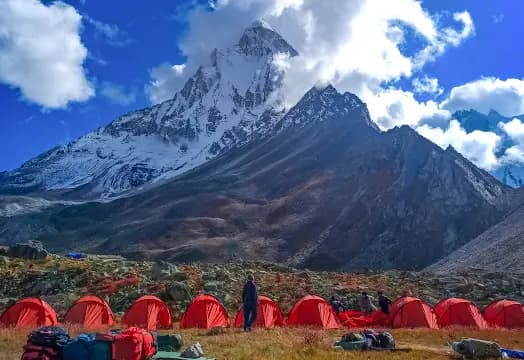
Trek to the Holy Glaciers: Gaumukh Tapovan Trek Highlights
There are, and there will be, countless journeys that you will go on throughout your lifetime, but only a few of them are going to stay close to your heart, and one of them will be the ‘Gaumukh Tapovan Trek’. A journey that will not only challenge your body, but it will also touch your soul. This 8-day journey will take you to the Garhwal region of Uttarkashi, where you will experience both adventure and spirituality in the mountains and gain a sense of peace in solitude.
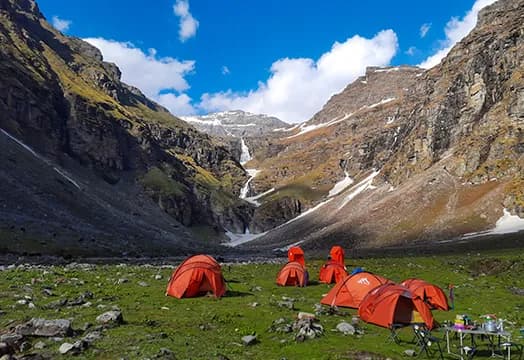
5 Reasons Why Rupin Pass Should be Your Next Trek?
Just like some heartwarming movies you keep rewatching, there are places you hope to visit every once in a while. Those places have their own magic that can’t be expressed in words but can only be felt while being there. So, to give you a similar kind of experience, we have a place to recommend for you all.
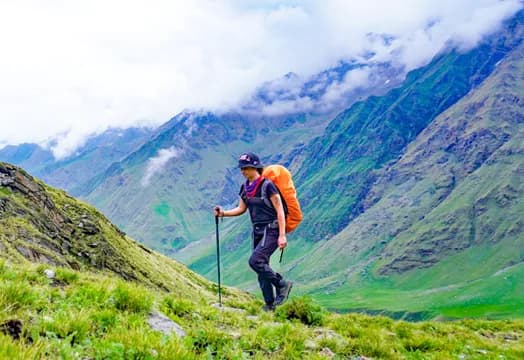
Why We Never Let Trekkers Go Without Trekking Poles — And You Shouldn’t Either
Walking on the rugged, unknown terrain of the mountains is one of those few experiences that makes you feel very different yet calming inside. But to achieve that feeling, not only do you have to plan a trip to the mountain, you are also supposed to carry gear and other things that are important for trekking.
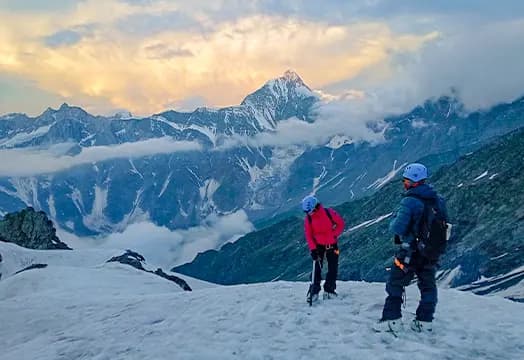
From Beginner to Challenging: Your Complete Guide to Expedition Grades
Standing at the base of any mountain, while staring at the peak of that mountain. A lot is felt by a trekker, from feeling stunned, admiration, to a quick rush of adrenaline, to scared, and then self-doubting yourself, asking - Can I really do this? When a trekker starts climbing a mountain, it’s not just always about claiming the peak. Often, trekking is more about learning and getting to know the mountains. After getting familiar with the mountains, you start understanding the challenges the mountains carry within themselves, and then you start ascending accordingly.
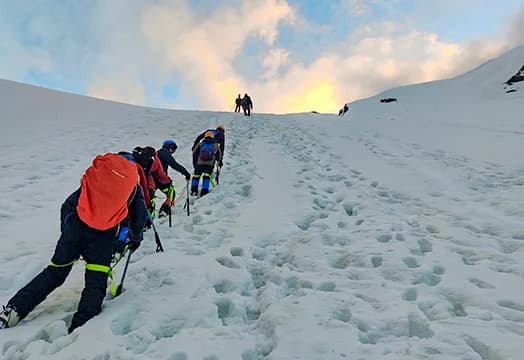
The Ultimate Guide to Expedition Grades and Techniques
In general, trekking in the mountains is always categorised as either climbing or walking on the mountain trails. But what a lot of people don’t realise is that with each different grade of expedition, the techniques of climbing and walking on the mountains also change. The thing is that to climb some high grade of mountains, more than basic skills and techniques of climbing are required to learn. In fact, the ‘technical climbing’? It is not just for high-grade level mountain expeditions; this kind of technical knowledge is quite useful even in the easy graded expedition to ensure the safety of the trekker throughout their trek.
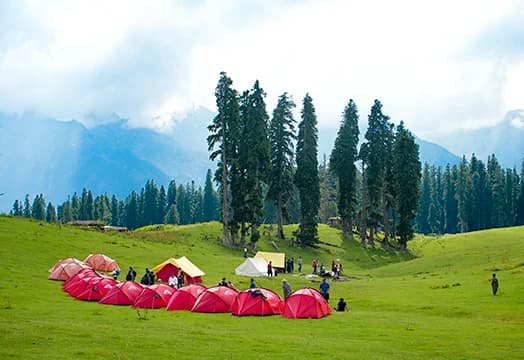
Why You Should Choose Trek the Himalayas Over Other Trekking Companies
Planning a trip is not an easy task, and when it comes to the mountains, a lot of factors need to be considered from a trekker's perspective. And when you are surrounded by all the hustle and bustle of life, planning a trip seems like too much work, right? Well, that’s exactly where trekking companies come into the picture. From booking to planning and ensuring that you receive a once-in-a-lifetime Himalayan experience, they make sure to make all these things happen. Now, after deciding that you want a trekking company to plan your trek, it’s time for you to pick the best trekking company in India to curate the itinerary for you. See, in today’s time, there are so many trekking companies out there who are ready to plan, manage, and guide you at every step of your journey, but who is best among them? That’s the real question. As a trekker, you might have thought several times, " Which company will truly help you out to become prepared for the Himalayas? Will they keep safety, food, and things like hygiene as their priority? Or if you are a female trekker, will it be safe and comfortable for you to trek with them or not?” And so on. These are exactly those points that draw a true comparison between Trek The Himalayas (TTH) and other trekking companies, viewing things from a trekker’s lens.
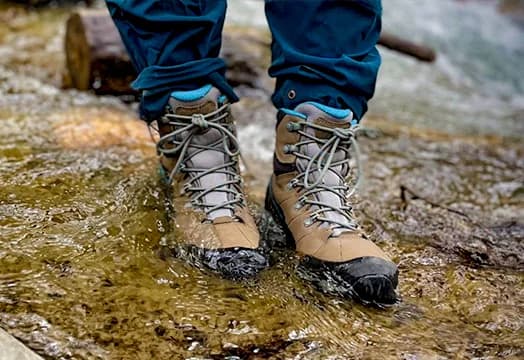
Your Ultimate Trekking Shoes Guide to Trek the Himalayas
There is one question that every trek leader asks their trekkers when they first meet them: Do they really understand the importance of trekking shoes for their trek? And usually, trekkers answer that they protect their feet, which is true. But do trekking shoes really help your feet in just “protection” and nothing else? Well, that is exactly what our trek leader (name) is going to enlighten us all about. First and foremost, it's essential to understand that trekking shoes are the foundation of a good trekking experience. If you are not carrying good quality shoes, then no matter how confident, strong, or motivated you are. You are bound to slip or slow down while walking on your trek. And as someone who has spent years climbing up and down the Himalayan trail several times. There is one thing that he said with complete certainty: The right trekking shoes can make or break your trek.
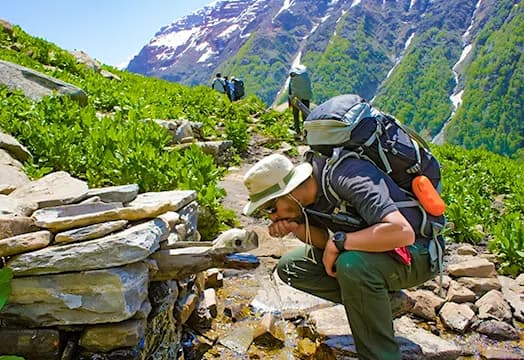
Hydration Can Make or Break Your Trek: Trek Leader’s Tips for Every Season
The main highlight of any trek journey will always be either the places you get to explore or the views that you will get to witness only once in your life. But to explore and experience all that scenic beauty, you must remain safe and healthy, which can be possible only if you do the proper intake of nutrients, and most importantly, of all consume water in a perfectly adequate amount. It’s an obvious yet the most ignored fact that Hydration is very important for trekking, it’s like the backbone of the whole trip. Which is why every trek leader’s first question at the start or end of their trek is - How much water did you drink today? Half of the time, the pattern of the answer remains the same, where some of them just give sheepy smiles, some tell numbers but are in doubt, and some of them have no idea whether they have drunk it at all or not.
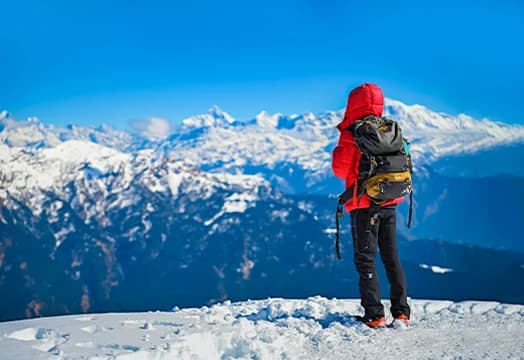
Pro Tips to Defeat the Winter Cold: Essential Guide by Trek Leader
Every year, hundreds of trekkers go on a winter trek specifically to enjoy and witness the snow-covered landscapes, stunning panoramic mountain views, and experience the serene beauty of nature. However, as they focus more on the enjoyment aspect of their journey, they sometimes overlook small details while preparing for their winter trek adventure. And the most missed details by trekkers are - not equipping themselves properly with winter trekking essentials, which will help them in staying warm during a winter trek. I mean, we all know that cold never suddenly comes in; it slowly starts creeping into the weather. When you are wearing your socks, at first you will feel chills in your body, then when you stop moving, a warmth will settle, and as you keep progressing in your trek, you will also start feeling colder. In one moment, you’re admiring frost-covered tree views, and in the other, you will be wondering why your fingers have started feeling numb suddenly despite wearing gloves.
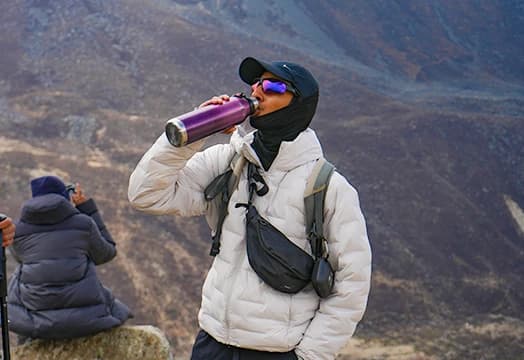
Essential Tips for Staying Hydrated on Winter Treks
Hydration plays a vital role in ensuring a safe and successful Himalayan trek. Whether you're adjusting to altitude or braving cold winter conditions, staying hydrated is key to maintaining physical performance, cognitive function, and overall well-being. Dehydration can lead to muscle cramps, cognitive impairment, and increased risk of altitude sickness, among other issues. In winter treks, hydration challenges such as reduced thirst, freezing water sources, and respiratory fluid loss become prominent. This article explores the importance of hydration, tips for staying hydrated in winter treks, and practical strategies like using insulated water bottles, monitoring fluid intake, and balancing electrolytes to ensure an enjoyable, well-hydrated trek.