
.webp)
.webp)
.webp)
.webp)
Rupin Pass Trek
Rupin Pass Trek
Himachal Pradesh

Location
Himachal Pradesh

Duration
7 days

Max Altitude
15350 ft

Trekking
42 km

Grade
Moderate to Difficult
Get in Touch with Our Trek Expert
Monday–Saturday: 10 AM to 06 PM (GMT +5:30)
Location
Himachal Pradesh
Duration
7 days
Max Altitude
15350 ft
Trekking km
42 km
Grade
Moderate to Difficult
Get in Touch with Our Trek Expert
Monday–Saturday: 10 AM to 06 PM (GMT +5:30)
Overview
Special Offer
Why is Rupin Pass a Must-Do trek ?
- Rupin Pass Trek is one of the most scenic treks in Himachal, it takes you through diverse landscapes, changing from lush green valleys to snow-covered terrains.
- Every turn during this trek will surprise you with some amazing sceneries, including cascading waterfalls, snow bridges, and panoramic mountain vistas.
- Crossing the thrilling Rupin Pass is a memorable adventure in itself.
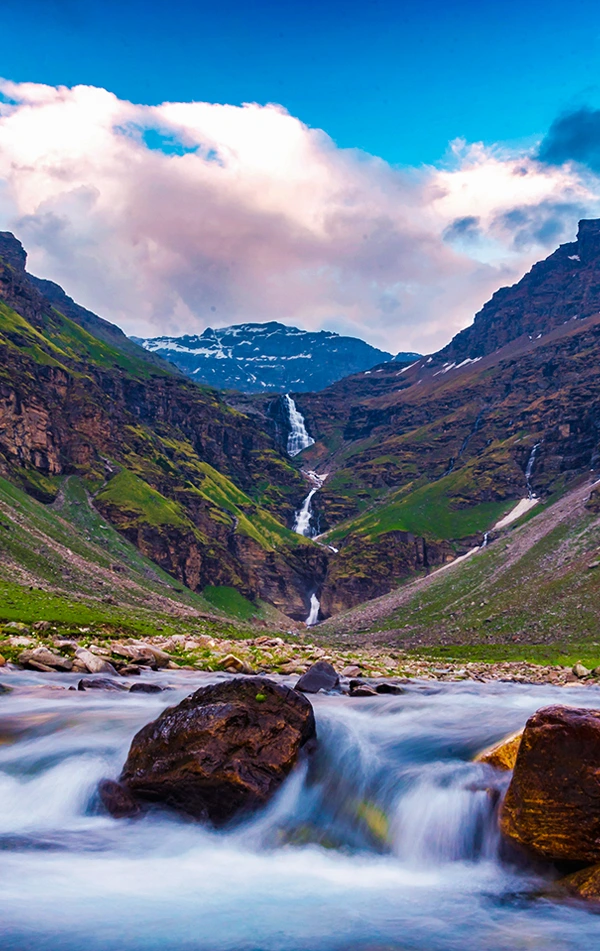
- The waterfalls during this trek will leave you in awe with their beauty, especially the three stage Rupin waterfall, which looks magical.
- You get a unique experience of trekking besides a waterfall, with the gushing water flowing besides you.
- Witness the Jakha village, also known as the hanging village, because of its appealing position on the mountain side.
- The trek passes through local villages, providing you an opportunity to engage with the local culture and witness the Kathkuni architecture of the houses.
- The final push towards the pass involves walking on the snow and climbing over ridges, giving you a thrilling trekking experience.
- Even the campsites of this trek are at scenic locations, including the Dhandreyash Thatch, where you camp amid vast meadows with a view of the Rupin waterfall.
Rupin Pass trek- A Journey through Meadows, Waterfalls, and Snowy Trails
Himachal is well known for its stunning natural beauty, and you can experience it at its best during the Rupin Pass trek. This trek is one of the most thrilling and picturesque adventures in the Himalayas, offering beautiful landscapes, diverse trails, and an immersive cultural experience. It takes you through dense forests, lush meadows, and rocky terrain before reaching the majestic Rupin Pass. The ever-changing scenery keeps the journey exciting, with every step revealing a new wonder of nature. Along the way, you will witness cascading waterfalls, cross wooden bridges over crystal-clear streams, and walk through high-altitude meadows decorated with little vibrant wildflowers.
The trek begins from Bawta village, a charming settlement known for its traditional Kath-Kuni style wooden houses, made from sturdy deodar cedar wood. These homes not only add to the village’s rustic charm but also provide a warm and cozy atmosphere, perfect for the chilly mountain nights. The trail takes you through dense oak and rhododendron forests, where the air is filled with the fresh scent of pine and the chirping of birds. The trek offers you picturesque panoramic views of snow-capped peaks and valleys stretching as far as the eye can see. One of the most memorable moments during the Rupin Pass trek is trekking alongside a magnificent waterfall, its roaring sound filling the air and the cool mist refreshing you as you pass by.
Major Attractions along the Rupin Pass Trek
- Hanging Village of Jakha: Jakha is known as the “Hanging Village” due to its steeply built houses that appear stacked on top of one another. This small Himalayan settlement is the last inhabited village before entering the wild terrain of the trek.
- Buransh Kandi: A short stretch of rhododendron forests adds a magical touch to the trail. If you trek during the blooming season, you'll witness rhododendrons in full bloom, painting the landscape in stunning shades of red and pink. Even the fallen petals enhance the beauty of the path. Though this section is brief, it creates a beautiful contrast against the lush green surroundings.
- Dandreyash Thatch, a vast expanse: This vast open meadow, surrounded by towering peaks and a view of the Rupin waterfall, serves as one of the best camping spots. In the summer, it is dotted with wildflowers, making it look like something straight out of a dream.
- Rupin Waterfall: The best part of the trek is the Rupin Waterfall. The river flows down from a great height in multiple tiers, and you even get a chance to camp near the base of the waterfall which surely is a remarkable experience, but the best part is you get to trek besides the waterfall.
- Rupin Pass– The Final Push: Crossing the Rupin Pass at an impressive elevation of 4,700m (15,350 ft) is a rewarding experience. The narrow Rupin Gully, with its snow-covered path, adds an element of adventure. Once at the top, the view of the surrounding Himalayan peaks makes all the effort worthwhile.
- Descent into Sangla Valley: Unlike most treks that retrace their steps, the Rupin Pass Trek ends in a different location. The final descent leads to the beautiful Sangla Valley in Himachal Pradesh, known for its apple orchards and the Baspa River flowing through it.
What you can Expect during Rupin Pass Trek?
You can expect your journey to Rupin Pass Trek, to be a memorable and a scenic adventure amid the beautiful Himalayas. The trails offer stunning views of cascading waterfalls, crystal- clear rivers, and scenic campsites too. Something that makes this trek a one of a kind is the rare experience of trekking alongside waterfalls, something not often found on other trails. The campsites during this trek are perfect spots for resting and acclimatizing along with stunning views, they provide you a peaceful escape too. Dandreyash Thatch is one such campsite that would make you instantly fall in love with the surroundings, and you would surely feel like staying there for even longer. Along with scenic beauty you can expect a rich cultural experience and friendly locals too.
The trek is moderate to difficult, with steep inclines and challenging sections that will test your endurance. The final stretch is covered in snow, making the last push even more exciting and adventurous. Along with the beautiful surroundings, you should also be aware of the possibility of AMS (Acute Mountain Sickness) as you gain altitude. To prevent this, drink plenty of water, maintain a slow and steady pace, take time to acclimatize, and listen to your trek leaders. Rest when needed, stay positive, and trust in yourself as you tackle this incredible journey.
Best Time to do Rupin Pass Trek
The best time to do the Rupin Pass trek is during the summer and autumn months, specifically in May, June, October, and November. During this period, the trails are at their best, they are easy to navigate and trek on a perfect blend of navigability and beauty. The weather is more favorable, making the trek more enjoyable, with wildflower blooms and lush green meadows that add vibrant colors to the landscape. One of the most picturesque spots along the trek is the Buransh Kandi stretch, where blooming Rhododendrons enhance the beauty of the surroundings, during this time, creating a truly magical experience. The pass itself is most accessible during these months, as the snow cover is relatively less, and the weather conditions are ideal for a safe journey. Trekking during this time ensures you get to experience the full splendor of the trek in its most stunning form.
Rupin Pass is the perfect choice if you're looking to experience the serenity, adventure, and natural beauty of trekking in Himachal. The trek is full of surprises, and you’ll never want it to end as every moment offers something new and exciting. If you’re ready for a challenge, choose Rupin Pass and let the stunning beauty of the Himalayas amaze you at every step.
Arrival In Bawta
- Altitude Bawta: 2,350 m/ 7,700 ft.
- Drive Distance: 195 km | 8 - 9 hr.
Bawta to Jakha
- Altitude Jakha: 2,750 m/ 9,000 ft.
- Trek Distance: 5 km | 4 hrs.
Jakha to Saruwas Thatch
- Altitude saruwas Thatch: 3,261 m / 10,700ft.
- Trek Distance: 8 km | 5 - 6 hrs.
- Accommodation: Campsite.
Saruwas Thatch to Dandreyash Thatch
- Altitude: 3,550 m / 11,700 ft
- Accommodation: Campsite
Dandreyash Thatch to Upper Waterfall
- Altitude Upper Waterfall: 4,050 m / 13,300 ft)
- Trek Distance: 2 km | 3-4 hrs
- Accommodation: Campsite
Upper Waterfall to Ronti Gad via Rupin Pass
- Altitude:
- Rupin Pass: 4,700 m / 15,350 ft
- Ronti Gad: 3,750 m / 12,300 ft
- Trek Distance: 12 km | 10-11 hrs
- Accommodation: Campsite
Ronti Gad to Sangla & Drive to Shimla
- Altitude Sangla: 2,650 m/ 8,700 ft.
- Trek Distance: 11 km | 5-6 hrs.
- Drive Distance: 215 km | 9-10 hrs.
- Pulse rate at rest must be in between (60 to 100 beats per minute).
- Blood Pressure Reading must be in between (DIASTOLIC 75 – 85, SYSTOLIC 100 - 130 mm Hg).
- Respiratory rate at rest must be in between (12 to 20 breaths per minute).
- Should not have Liver and kidney issues.
- Should not have Diabetes Mellitus, Bronchial Asthma, Heart problems, Hypertension, etc.
- No pacemaker implant.
- People with Sinus issues, Epilepsy please contact to trek coordinator before booking the trek.
- If your BMI is not normal, Please contact our Trek coordinator before Trek booking.
Medical & Disclaimer Form (Mandatory Documents) Click here to download Medical & Disclaimer Form
How to reach — Maps
.webp)
It is essential for everyone to arrive at Shimla (05:30 am)
Meeting
Place: Shimla Old Bus Stand.
Once you have reached Shimla, TTH will manage the rest of your travel arrangements, if you have opted for TTH's pick-up service, you can select this option during the booking process by adding it as an add-on (book it at least 10 days before trek date)
It is advisable to reach Shimla a day before to avoid any kind of delays.
Options to reach Shimla:
First, you can arrive at Chandigarh, Delhi, Kalka, or Shimla airport. The journey from these locations to Shimla is explained below.
1. Take overnight bus to Shimla from Delhi or Chandigarh, taking a bus from Chandigarh is the most ideal option.
-Chandigarh to Shimla Bus Stand : 120 km | 4 hr.
-Delhi to Shimla Bus Stand : 350 km | 10 hr.
( We always recommend going for the govt. Buses over the private ones outside the bus station as based on the experience we have found that there are very high chances of delay involved with private buses. Also, govt. Buses are always more reliable. Whichever bus you choose, just make sure to reach Shimla at least by 05:30 am. )
2. Take a Train to Kalka and drive to Shimla. One can take the pleasure of a toy train, If you're arriving by Train, then come one day in advance.
3. Take a flight to Shimla airport (Jubbarhatti airport) (22 km, 50 min). If you're arriving by air, then come one day in advance.
The designated drop-off point is Shimla old bus stand.
Reach Shimla by 11:00 pm to 1:00 am, Please arrange your hotel and make further bookings in Shimla accordingly.
It's highly advisable to keep a buffer day in your travel plan. If the buffer day is not needed, it can be used to explore Shimla.
( If you prefer to travel independently, you can either take a government bus or book a private cab. Your trek coordinator will provide guidance on how to arrange for the bus or cab booking. )
TTH offers comfortable transportation through Tempo Traveler, Bolero, or equivalent vehicles. If you wish to upgrade your mode of transportation, please contact your trek coordinator for further assistance.
1. Accommodation (as per the itinerary):
- Homestay (dormitory with ground mattress.)
- Camping (Twin sharing basis).
2. Meals (Veg + Egg):
- All meals from Day 1 Dinner to Day 7 breakfast as per the itinerary.
3. Support:
- 1 Versatile base camp manager handles communication and deploys extra manpower in emergencies.
- 1 Mountaineering & First aid qualified professional trek Leader.
- 1 Experienced high altitude chef.
- Local experienced guides (Number of guides depending on the group size).
- Enough support staff.
4. Trek equipment:
- Sleeping bag, Sleeping liners (if required), mattresses, and Utensils.
- 3 men all season trekker tent (twin sharing), Kitchen & Dining tent, Toilet tent.
- Camping stool, Walkie talkie.
- Ropes, Helmet, Ice axe, Harness, Gaiters & crampons (if required).
5. First aid:
- Medical kit,Stretcher,Oxygen cylinder,Blood pressure monitor,Oximeter,Stethoscope.
6. Mules/porters to carry the central luggage.
7. Cloakroom facility available at pick up point shimla for additional luggage.
9. All necessary permits and entry fees, up to the amount charged for Indian.
10. Services from Bawta to Sangla.
11. Trek Completion Certificate.
Trek Essentials
Cancellation Terms
To request a cancellation, please email us at info@trekthehimalayas.com using your registered email ID.
Cancellations prior to 25 days from the start of the Trip
Refund Options
- 5% deduction of trek fee
- 100% trek fee cash voucher for any trip till one year
- Transfer your trek (any trek, any date) to your friend
Cancellation between 24 days and 15 days to the start of the Trip
Refund Options
- 30% deduction of trek fee
- 100% trek fee cash voucher for same trip till one year
- 85% trek fee cash voucher for any trip till one year
- Transfer your trek (same trek, any date) to your friend
Cancellation between 14 days and 10 days to the start of the Trip
Refund Options
- 50% deduction of trek fee
- 80% trek fee cash voucher for same trip till one year
- 70% trek fee cash voucher for any trip till one year
- Book the same trek, in the same season, with any other batch
- Transfer your trek (same trek, any date) to your friend
Cancellation less than 9 days to the start of the trek.
Refund Options
- No cash refund
- 20% trek fee cash voucher for the same trip till one year
- 10% trek fee cash voucher for any trip till one year
- Transfer your trek (same trek, same date) to your friend
- To reschedule a trek (same trek only), a 30 % rescheduling fee of the trek cost will apply.
Cancellation Policy (Emergency Cases):
In case of a death in the immediate family (parents, siblings, spouse, children) or if the trekker is hospitalized (min. 48 hours) or suffers a fracture (leg/arm) within a week before the trek, even if canceled a day before:
90% trek fee refund in cash & 10% as a voucher (valid for 1 year, for any India trek).
Valid documents required. We’re here to support you during tough times.
Note:
- Change of trek batch is dependent on the availability of seats in the batch
- In case of transferring a trek to a friend, he/she should satisfy all the mandatory requirements put forward by TTH
- TTH holds the right to change/cancel the policies, without prior notice
Booking and Payments
- The Participant is responsible for verifying the accuracy of all details, including Trip dates and personal documentation, at the time of booking.
- Payments must be made in accordance with the timelines and instructions provided by TTH. Late payments may result in cancellation of booking without refund.
- In the event of a cash refund, only the portion of the payment made in cash shall be eligible for refund in cash. Any booking made using voucher, discounts, promotional codes, or through any non-cash mode of payment shall not be eligible for a cash refund under any circumstances.
- Refunds, if applicable, shall be processed within 15–30 working days of confirmation.
- All add-on bookings are subject to the respective add-on cancellation policy, and refunds will be processed accordingly.
- Voucher Terms
- This is a non-transferable voucher
- The voucher cannot be merged with any other offer of Trek The Himalayas
- The voucher is valid for Trek booked directly with Trek The Himalayas in India
- To avail the voucher please use your register phone number or e-mail id
- All the other Terms of booking a trek with Trek The Himalayas are applicable to the voucher
Itinerary and Modifications
- TTH reserves the right to modify, shorten, or cancel any part of the Trip due to transportation delays, weather, health emergencies, or other unforeseen circumstances including Force Majeure.
Cancellations and Refunds
- No refunds or vouchers, partial or otherwise, shall be provided for voluntary withdrawal, non-utilisation of services, or removal from the Trip.
- If TTH cancels the Trip before arrival at the designated pick-up point due to unforeseen circumstances or Force Majeure, the Participant may choose from:
- An alternate Trip/date.
- A credit voucher valid for one (1) year.
- Transfer to another Trip, with cost differences payable by the Participant.
- If the Trip is abandoned post-arrival at the designated pick-up point, no cash refund or voucher shall be issued. The Trek Again Policy may apply at TTH’s discretion.
- TTH shall not be liable for any associated travel costs such as flights, accommodation, or visa fees.
Force Majeure
- Events beyond its control including but not limited to earthquakes, landslides, strikes, curfews, war, pandemic, government restrictions, heavy rainfall or snowfall, windstorms, road blockages, trail disruption, or withdrawal of permits, TTH shall not be held liable for any cancellation, delay, or service modification caused by Force Majeure.
Government employees can avail the benefit of Special Casual Leave (SCL) when they join us for a trekking expedition. As per Pay Commission guidelines, up to 30 days of Special Casual Leave can be availed in a calendar year for trekking or mountaineering expeditions conducted through a registered organisation.
Trek The Himalayas is a registered adventure tour operator with the Indian Mountaineering Foundation (IMF) and the Ministry of Tourism (MoT), making your trek eligible for SCL benefits.
To apply, email us at info@trekthehimalayas at least 20 days before the trek departure date, with the following details:
- Trek name and trek date
- Booking details
- Full name
- Designation
- Department and department address
This benefit is exclusive to Indian Government employees and is applicable only for treks within India.
Frequently Asked Questions (FAQ)

Here are some of the essentials you should carry for the trek:
1. Trekking shoes: A good pair of trekking shoes is essential for a comfortable trek. Make sure your shoes are well-fitted, sturdy and provide good grip on the trail.
2. Warm Clothing: The weather can be unpredictable in the mountains, so it's important to carry warm clothing, including thermal innerwear, fleece jackets, down jacket, and waterproof jacket.
3. Trekking pants: Carry comfortable and quick-drying trekking pants that are suitable for the weather conditions.
4. Backpack: A good quality backpack with a capacity of 40-50 liters is ideal for carrying your essentials during the trek.
5. Sleeping bag: A good quality sleeping bag is essential for a comfortable stay during the camping nights.
6. Headlamp/Flashlight: Carry a good quality headlamp or flashlight with extra batteries for trekking during early morning or late evening hours.
7. Water bottle: Carry a reusable water bottle and stay hydrated throughout the trek.
8. Snacks: Carry energy bars, dry fruits, and snacks for instant energy during the trek.
9. First aid kit: Carry a basic first aid kit, including band-aids, antiseptic cream, pain relief spray, and medicines for altitude sickness.
10. Sun protection: Carry sunscreen lotion, sunglasses, and a hat to protect yourself from the harsh sun rays.
11. Trekking poles: Trekking poles can help in maintaining balance and reduce the strain on your knees while trekking.
The best time to do Rupin Pass Trek is during Summer and Autumn, during the months of May, June, September, October and November. During these months, the trails are at their best, they are easy to navigate and trek through. The weather is more favorable, making the trek more enjoyable, with wildflower blooms and lush green meadows that add vibrant colors to the landscape.
Rupin Pass Trek is a moderate to difficult grade trek. The trail includes steep climbs, rocky terrain, and narrow paths and even trekking with a waterfall.
With Trek the Himalayas Rupin Pass is a 7 days trek. During these 7 days, you will pass through amazing landscapes, stay at scenic campsites and have a memorable time.
Rupin Pass Trek starts from Bawta village in Himachal Pradesh.
The maximum altitude of the Rupin Pass Trek is 15,350 ft, which is achieved at the Rupin Pass.
The total distance covered in Rupin Pass Trek is around 41 km. All this distance takes you through stunning landscapes like meadows, waterfalls and vast mountains.
While it is not mandatory to have prior trekking experience for the Rupin Pass Trek, it is recommended that you have some level of fitness and experience in trekking. The Rupin Pass Trek is moderately difficult and takes you at an altitude of 15,350 feet, so it requires a good level of physical fitness and endurance. The trail includes steep climbs, rocky terrain, and narrow paths, so prior experience in trekking can help you tackle the challenges with ease. Moreover, the Rupin Pass Trek can be unpredictable, and the weather conditions can change quickly, so having prior trekking experience can help you adapt better to the challenges on the trail. However, with proper training and preparation, even first-time trekkers can undertake the Rupin Pass Trek and enjoy the stunning landscapes and cultural experiences along the way. It is always advisable to consult with a trekking company or a professional guide to assess your fitness level and discuss the requirements of the trek before embarking on the journey.
The Rupin Pass Trek is generally considered safe, but like any high-altitude trek, it comes with its share of risks and challenges. However, with proper preparation, precautions, and guidance, you can minimize the risks and ensure a safe and enjoyable trek. One of the main risks on the Rupin Pass Trek is altitude sickness, which can affect you at high altitudes. It is important to acclimatize properly and stay hydrated to avoid altitude sickness. We follow a well-planned itinerary with gradual altitude gain to help you acclimatize properly. It is always advisable to undertake the Rupin Pass Trek with a reputable trekking company. It is important to follow safety guidelines and instructions provided by the trek leaders to ensure a safe and enjoyable trek.
The highest point of the Rupin Pass Trek is the Rupin Pass at an altitude of 15,350 ft.
The Rupin Pass Trek is a stunning journey through the lesser-known parts of the Indian Himalayas. The trail is filled with diverse landscapes, from dense forests of oak and rhododendron to high-altitude meadows and snow-covered slopes. The Rupin River is a constant companion on the trek, providing a soothing soundtrack as it rushes through the valleys. The major highlight of the trek is the Rupin Pass, which sits at an altitude of 15,350 feet and offers panoramic views of the surrounding mountains. Another highlight of the Rupin Pass trek is the Rupin waterfall, a three tier beautiful waterfall. As you make your way up to the pass, the scenery changes dramatically, with the rocky terrain giving way to patches of snow and ice. The Rupin Pass Trek is a challenging trek that requires a good level of fitness and experience, but the rewards are well worth the effort. You'll have the chance to witness the raw beauty of the Himalayas and immerse yourself in the culture of the remote villages that dot the trail.
Loading media...
Rupin Pass Trek Video Testimonials
Hear Trekkers Share Their Rupin Pass Trek
Must Read Articles
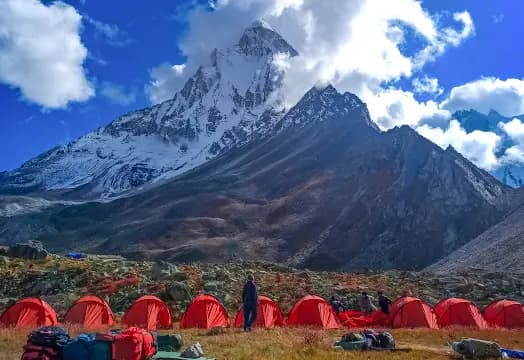
Trek to the Holy Glaciers: Gaumukh Tapovan Trek Highlights
There are, and there will be, countless journeys that you will go on throughout your lifetime, but only a few of them are going to stay close to your heart, and one of them will be the ‘Gaumukh Tapovan Trek’. A journey that will not only challenge your body, but it will also touch your soul. This 8-day journey will take you to the Garhwal region of Uttarkashi, where you will experience both adventure and spirituality in the mountains and gain a sense of peace in solitude.
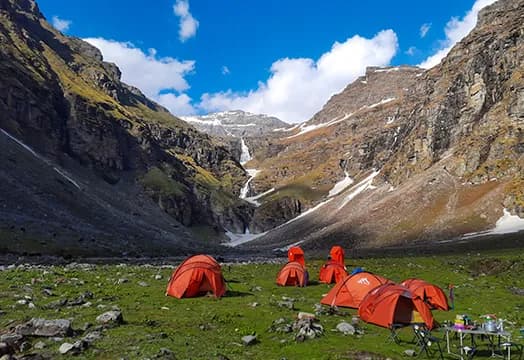
5 Reasons Why Rupin Pass Should be Your Next Trek?
Just like some heartwarming movies you keep rewatching, there are places you hope to visit every once in a while. Those places have their own magic that can’t be expressed in words but can only be felt while being there. So, to give you a similar kind of experience, we have a place to recommend for you all.
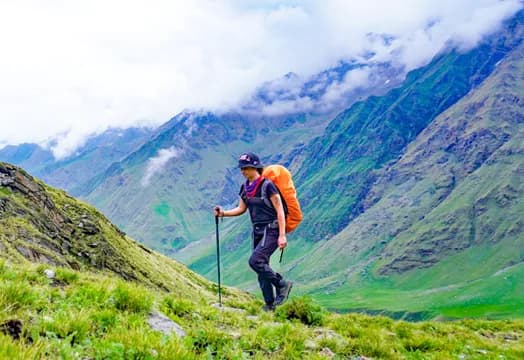
Why We Never Let Trekkers Go Without Trekking Poles — And You Shouldn’t Either
Walking on the rugged, unknown terrain of the mountains is one of those few experiences that makes you feel very different yet calming inside. But to achieve that feeling, not only do you have to plan a trip to the mountain, you are also supposed to carry gear and other things that are important for trekking.
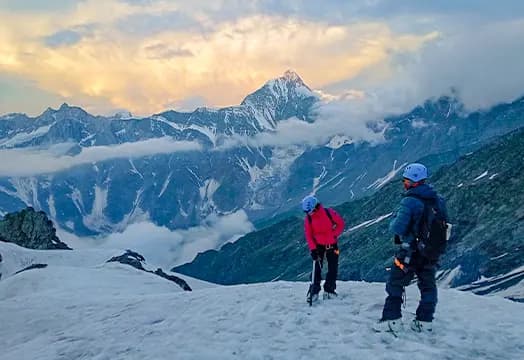
From Beginner to Challenging: Your Complete Guide to Expedition Grades
Standing at the base of any mountain, while staring at the peak of that mountain. A lot is felt by a trekker, from feeling stunned, admiration, to a quick rush of adrenaline, to scared, and then self-doubting yourself, asking - Can I really do this? When a trekker starts climbing a mountain, it’s not just always about claiming the peak. Often, trekking is more about learning and getting to know the mountains. After getting familiar with the mountains, you start understanding the challenges the mountains carry within themselves, and then you start ascending accordingly.
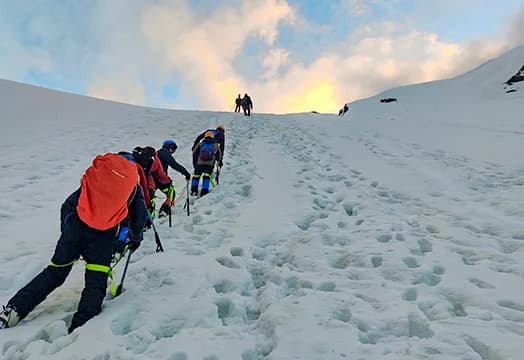
The Ultimate Guide to Expedition Grades and Techniques
In general, trekking in the mountains is always categorised as either climbing or walking on the mountain trails. But what a lot of people don’t realise is that with each different grade of expedition, the techniques of climbing and walking on the mountains also change. The thing is that to climb some high grade of mountains, more than basic skills and techniques of climbing are required to learn. In fact, the ‘technical climbing’? It is not just for high-grade level mountain expeditions; this kind of technical knowledge is quite useful even in the easy graded expedition to ensure the safety of the trekker throughout their trek.
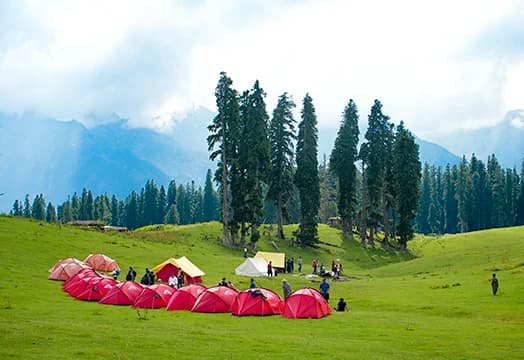
Why You Should Choose Trek the Himalayas Over Other Trekking Companies
Planning a trip is not an easy task, and when it comes to the mountains, a lot of factors need to be considered from a trekker's perspective. And when you are surrounded by all the hustle and bustle of life, planning a trip seems like too much work, right? Well, that’s exactly where trekking companies come into the picture. From booking to planning and ensuring that you receive a once-in-a-lifetime Himalayan experience, they make sure to make all these things happen. Now, after deciding that you want a trekking company to plan your trek, it’s time for you to pick the best trekking company in India to curate the itinerary for you. See, in today’s time, there are so many trekking companies out there who are ready to plan, manage, and guide you at every step of your journey, but who is best among them? That’s the real question. As a trekker, you might have thought several times, " Which company will truly help you out to become prepared for the Himalayas? Will they keep safety, food, and things like hygiene as their priority? Or if you are a female trekker, will it be safe and comfortable for you to trek with them or not?” And so on. These are exactly those points that draw a true comparison between Trek The Himalayas (TTH) and other trekking companies, viewing things from a trekker’s lens.
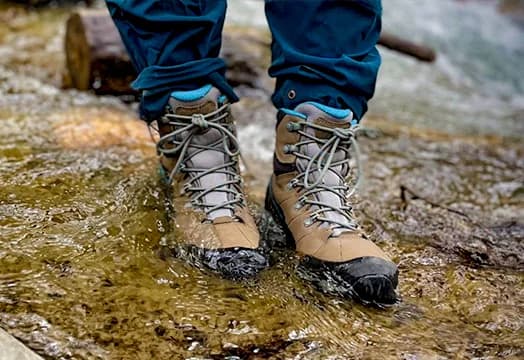
Your Ultimate Trekking Shoes Guide to Trek the Himalayas
There is one question that every trek leader asks their trekkers when they first meet them: Do they really understand the importance of trekking shoes for their trek? And usually, trekkers answer that they protect their feet, which is true. But do trekking shoes really help your feet in just “protection” and nothing else? Well, that is exactly what our trek leader (name) is going to enlighten us all about. First and foremost, it's essential to understand that trekking shoes are the foundation of a good trekking experience. If you are not carrying good quality shoes, then no matter how confident, strong, or motivated you are. You are bound to slip or slow down while walking on your trek. And as someone who has spent years climbing up and down the Himalayan trail several times. There is one thing that he said with complete certainty: The right trekking shoes can make or break your trek.
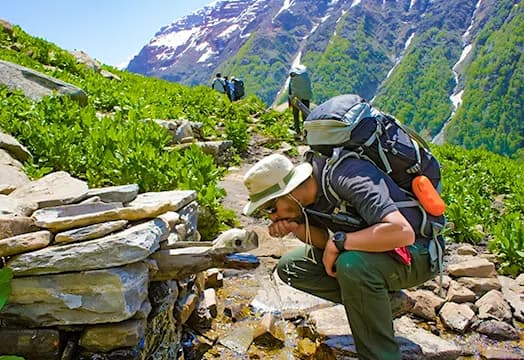
Hydration Can Make or Break Your Trek: Trek Leader’s Tips for Every Season
The main highlight of any trek journey will always be either the places you get to explore or the views that you will get to witness only once in your life. But to explore and experience all that scenic beauty, you must remain safe and healthy, which can be possible only if you do the proper intake of nutrients, and most importantly, of all consume water in a perfectly adequate amount. It’s an obvious yet the most ignored fact that Hydration is very important for trekking, it’s like the backbone of the whole trip. Which is why every trek leader’s first question at the start or end of their trek is - How much water did you drink today? Half of the time, the pattern of the answer remains the same, where some of them just give sheepy smiles, some tell numbers but are in doubt, and some of them have no idea whether they have drunk it at all or not.
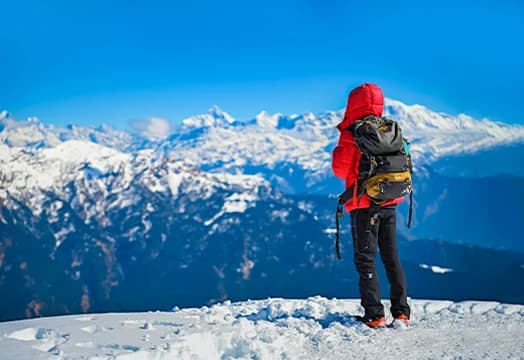
Pro Tips to Defeat the Winter Cold: Essential Guide by Trek Leader
Every year, hundreds of trekkers go on a winter trek specifically to enjoy and witness the snow-covered landscapes, stunning panoramic mountain views, and experience the serene beauty of nature. However, as they focus more on the enjoyment aspect of their journey, they sometimes overlook small details while preparing for their winter trek adventure. And the most missed details by trekkers are - not equipping themselves properly with winter trekking essentials, which will help them in staying warm during a winter trek. I mean, we all know that cold never suddenly comes in; it slowly starts creeping into the weather. When you are wearing your socks, at first you will feel chills in your body, then when you stop moving, a warmth will settle, and as you keep progressing in your trek, you will also start feeling colder. In one moment, you’re admiring frost-covered tree views, and in the other, you will be wondering why your fingers have started feeling numb suddenly despite wearing gloves.
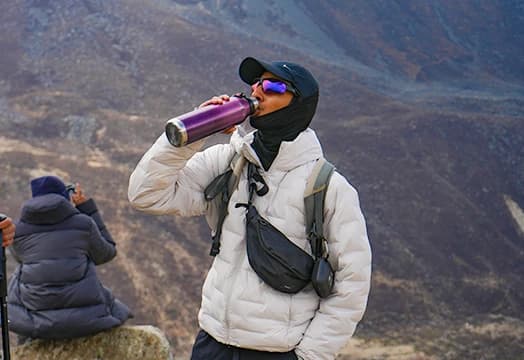
Essential Tips for Staying Hydrated on Winter Treks
Hydration plays a vital role in ensuring a safe and successful Himalayan trek. Whether you're adjusting to altitude or braving cold winter conditions, staying hydrated is key to maintaining physical performance, cognitive function, and overall well-being. Dehydration can lead to muscle cramps, cognitive impairment, and increased risk of altitude sickness, among other issues. In winter treks, hydration challenges such as reduced thirst, freezing water sources, and respiratory fluid loss become prominent. This article explores the importance of hydration, tips for staying hydrated in winter treks, and practical strategies like using insulated water bottles, monitoring fluid intake, and balancing electrolytes to ensure an enjoyable, well-hydrated trek.